
CONSUMER BRANDS
Consumer Private Equity: Bought, not built.
The brands defining this decade were invented in private hands. The incumbents are writing the checks — a small band of upstart brands is capturing most of the growth in consumer, financed and scaled privately, then sold to the giants that could not build them.
Download Report PDFWHERE THE GROWTH IS
The growth in consumer moved where the index cannot follow.
Start with the part most portfolios underestimate.
In 2025, a cohort of 113 upstart consumer brands captured roughly 36% of all the growth across tracked consumer categories while holding less than 2% of the market.21 Over the past decade, some 400 such challengers generated about $60 billion in incremental US retail sales, more than the three largest consumer companies produced combined.21 In beauty and personal care, insurgent brands accounted for nearly all of the category's growth. This is not a tired, low-growth sector. Its growth has simply moved somewhere the public investor cannot easily follow.
It moved to the challengers, and it was captured in private hands. Poppi, Rhode, Alani Nu, Olipop: the brands rewriting the American shelf were financed, scaled, and de-risked by private capital for years before a strategic acquirer arrived to pay for the result. Data suggests that Big Consumer is not inventing the next decade. It is buying it. The question that follows for an advisor is the one this briefing is built around: who owned the ascent?
THE STRUCTURAL SHIFT
Big Consumer stopped inventing and started shopping.
The incumbent's research budget is now other people's cap tables.
There is a reason the growth sits with challengers. Over the decade to 2025, large consumer companies invested only about 1.5% of sales in research and development, while spending several times that on advertising.22 The breakthroughs of the era, from prebiotic soda to clean-label snacks, came overwhelmingly from insurgents rather than incumbents.22 So the incumbent's fastest route to owning a category it failed to create is to buy the company that did.
The market reflects this. Strategic acquirers — the Nestlés, PepsiCos, and Unilevers of the world — accounted for roughly 76% of consumer and retail transactions over the trailing year, dwarfing financial sponsors at around 13%.6 Analysts describe the model plainly as growth pursued non-organically, by buying smaller innovators rather than building in-house.5 A public conglomerate answers to quarterly earnings and cannot easily nurture a decade-long category bet; a private company can.8 A common pattern is that private investors help companies scale before a strategic acquirer ultimately purchases the business.
The capital is concentrating accordingly. Megadeals now represent roughly 47% of consumer deal value, nearly double their share two years earlier.9 When money flows only to the largest, most proven assets, the message is precise: the incumbent will pay up, but only for a winner that private capital has already carried through the risky years.
1.5%
of sales big consumer companies spent on R&D over the past decade22
76%
of consumer & retail deals done by strategic buyers, not financial sponsors6
47%
of consumer deal value now concentrated in megadeals, up from 23% two years prior9
THE ACCELERANT, NOT THE STORY
Celebrity and athlete equity compresses the clock.
Fame no longer rents a brand. It owns one, and it collapses a timeline that used to take a decade.
The genuinely new mechanic of this wave is the conversion of attention into equity. What Procter & Gamble once bought through ten years of television spend, a founder with a built-in audience now manufactures in three. Hailey Bieber's Rhode went from launch to a $1 billion sale to e.l.f. Beauty in under three years, on ten products and $212 million in net sales.3 Kim Kardashian's Skims reached a $5 billion valuation roughly six years after launch, raising fresh private capital led by Goldman Sachs rather than testing a listless consumer IPO market.11
Athletes discovered the lever earlier, and more literally. Kobe Bryant put roughly $6 million into the sports drink BodyArmor around 2014 in exchange for equity rather than an appearance fee. When Coca-Cola bought the brand in 2021 at a valuation near $8 billion, his estate's stake was worth an estimated $400 million.10 The template traces back to 50 Cent and Vitaminwater, and forward to Ryan Reynolds's Aviation Gin and George Clooney's Casamigos, both sold to Diageo, and Dwayne Johnson's ZOA, taken over by Molson Coors.
Kobe Bryant
BodyArmor → Coca-Cola
~$400M
Estimated value of a ~$6M equity stake when Coca-Cola bought the brand at a ~$8B valuation10
Hailey Bieber
Rhode → e.l.f. Beauty
$1B
Sale price under three years from launch, on ten products and $212M in net sales3
Kim Kardashian
Skims — still private
$5B
Valuation at its 2025 raise, six years after launch, led by Goldman Sachs11
THE EVIDENCE
Founded yesterday, acquired today.
The pattern is legible across every consumer category. Each brand below was built and financed privately, then either sold to a strategic that could not create it internally, or is compounding in private hands while the acquirers circle.
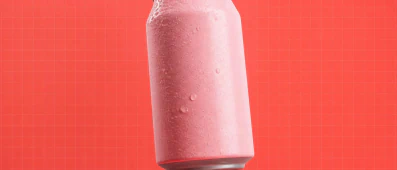
Functional Beverages & Energy
Acquired
Poppi (PepsiCo), fairlife (Coca-Cola), Alani Nu (Celsius), Ghost (Keurig Dr Pepper), BodyArmor (Coca-Cola)
Still Private
Olipop
Cautionary
Prime, Liquid Death
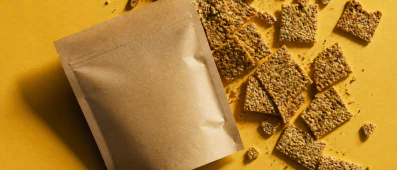
Food & Pantry
Acquired
Rao's (Campbell), Siete (PepsiCo), Simple Mills (Flowers), LesserEvil (Hershey)
Still Private
PopUp Bagels, Once Upon a Farm
Cautionary
—

Beauty & Personal Care
Acquired
Rhode (e.l.f.), Dr. Squatch (Unilever), The Ordinary (Estée Lauder), Drunk Elephant (Shiseido), Hero (Church & Dwight)
Still Private
Rare Beauty
Cautionary
Dollar Shave Club

Apparel & Athleisure
Acquired
—
Still Private
Vuori, Alo Yoga, Gymshark, Skims
Cautionary
—
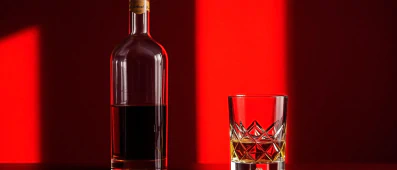
Spirits & Celebrity Drinks
Acquired
Casamigos (Diageo), Aviation (Diageo), ZOA (Molson Coors), Vitaminwater (Coca-Cola)
Still Private
818, Teremana
Cautionary
—
Retail, Pet & Emerging
Acquired
Erewhon, The Farmer's Dog, Athletic Brewing
Still Private
—
Cautionary
—
A representative subset of a much larger wave, not an exhaustive list. Brands are grouped by primary category.
The acquisitions span the shelf. Campbell paid $2.7 billion for the maker of Rao's, a premium sauce brand built to scale under private-equity ownership.23 Coca-Cola bought the rest of the ultra-filtered milk brand fairlife for about $980 million in 2020, then agreed to an uncapped, performance-based earnout that the brand's later growth turned into one of the largest such payouts the category has seen.25 Celsius bought the female-founded energy brand Alani Nu for $1.8 billion in 2025, seven years after its launch.24
| Brand | Category | Acquirer | Deal Value |
|---|---|---|---|
| Rao's (Sovos) | Premium sauce | Campbell | $2.7B |
| The Ordinary | Beauty | Estée Lauder | ~$2.2B |
| Poppi | Probiotic soda | PepsiCo | $1.95B |
| Alani Nu | Energy | Celsius | $1.8B |
| Dr. Squatch | Men's grooming | Unilever | ~$1.5B |
| Siete Foods | Better-for-you food | PepsiCo | $1.2B |
| Rhode | Beauty | e.l.f. Beauty | $1B |
| fairlife | Value-added dairy | Coca-Cola | ~$1B+ |
| Ghost | Energy | Keurig Dr Pepper | ~$1B |
| Drunk Elephant | Beauty | Shiseido | $845M |
| Simple Mills | Better-for-you food | Flowers Foods | $795M |
| LesserEvil | Snacks | Hershey | $750M |
| Hero Cosmetics | Skincare | Church & Dwight | $630M |
Values are drawn from acquirer filings and releases where available (Poppi,1 Rhode,3 Rao's,23 fairlife,25 Alani Nu24) and from financial press for the remainder.4,14
Consumer packaged goods produced more exits than any other sector over a recent six-month stretch, a rare distinction in a cautious deal market.14
The markup happens before the exit.
Even brands that have not sold show where the value accrues. Olipop, the prebiotic soda still in private hands, was valued near $200 million in 2022. By early 2025 a growth-equity round led by J.P. Morgan's private capital arm valued it at $1.85 billion, roughly nine times more, captured entirely by private owners.2 The pattern holds beyond the grocery aisle. Vuori, the activewear label taking share directly from Lululemon, was valued at $5.5 billion in a 2024 round led by General Atlantic while staying founder-controlled and profitable.26 The Farmer's Dog, a fresh pet-food subscription, crossed roughly $1.2 billion in annual revenue at a profit and is widely expected to go public rather than sell.27 In each case the value compounds privately first.
Olipop reported valuations, 2022 vs. 2025 growth-equity round.2
From cult to checkout, on someone else's balance sheet.
The same mechanism scales brands that reach the mainstream through cultural scarcity rather than a national ad budget. PopUp Bagels turned a Connecticut backyard ritual into a viral franchise; a growth-equity firm took a controlling position, and by early 2026 a reported investment from a major crossover investor valued the chain near $300 million, roughly five times its mark months earlier, on fewer than thirty shops.19 Erewhon, the Los Angeles grocer whose $20 celebrity smoothies turned a health-food store into a status object, took a growth-equity minority investment in 2019 and is now pursuing a national expansion.20 Consumer private equity, most often growth equity, is the engine converting cultural relevance into national scale, and it captures that value before any strategic or public buyer arrives.
THE OBJECTION WORTH TAKING SERIOUSLY
The bear case, and why it sharpens the thesis.
None of this is a one-way escalator.
Strategics are not reliable stewards of what they buy. Unilever paid roughly $1 billion for Dollar Shave Club in 2016, watched the business soften, and offloaded control to a financial sponsor in 2023.12 Private valuations can round-trip as fast as they climb: Liquid Death raised at a reported $1.4 billion in 2024, and a later secondary implied a value below $1 billion.13 The starkest warning is Prime, the creator-built drink from Logan Paul and KSI that reached roughly $1.2 billion in sales in 2023, then fell about 76% within two years as the novelty faded.28 Celebrity and founder brands carry acute key-person risk, and the median consumer deal now clears at about 9.2 times EBITDA, a decade low, on deal volumes down roughly 19% in 2025.7
But notice what the bear case actually says. It does not claim that private value creation is a mirage. It says the value is uneven, the winners are hard to pick, and the exit is never guaranteed. That is an argument for disciplined, diversified access to the category, not for avoiding it. The compression of multiples means the strategic now pays up only for the proven survivors, which is precisely the cohort where private capital captured the value first.
THE EXPOSURE GAP
The consumer runs the economy. It barely runs the index.
Which is the most structural argument of all for looking beyond public equities.
Personal consumption is the largest single engine of the American economy, running at roughly 68% of GDP, a share near its highest level on record.15 Yet an investor who owns the S&P 500 holds almost none of it. The two consumer sectors, discretionary and staples, together account for only about 15% of the index, while information technology alone approaches a third and the ten largest companies now sit near 40%.16, 17
Consumer share of the U.S. economy
~68%
Consumer share of the S&P 500
~15%
The little consumer exposure the index does provide is not what it appears. Inside the consumer discretionary sector, Amazon and Tesla alone make up roughly 42% of the weight.18 The two largest "consumer" names in the S&P 500 are an e-commerce and cloud platform and an automaker, not the branded food, beverage, and beauty businesses this briefing describes.
32.5%
of the S&P 500 sits in the seven largest technology-led names17
~42%
of the "consumer discretionary" sector is just Amazon and Tesla18
4.9%
of the index is consumer staples, the branded-goods heart of the sector16
So the passive investor is underweight the consumer twice over: light on the sectors by construction, and holding the wrong names within them. The category-defining brands, meanwhile, are acquired by strategics or held privately and never reach the index at all. In our view, the economy's largest engine is the one the public market is least able to deliver.
WHAT IT MEANS FOR YOUR CLIENTS
In consumer, the IPO is not the finish line. The strategic's balance sheet is.
Which changes the question an advisor should be asking.
For a decade the framing in technology was simple: did your client own the company before it went public? In consumer that question no longer fits, because the public listing has become the exception rather than the destination. Skims kept raising private capital instead of listing into a stagnant consumer IPO market.11 The real exit is a strategic acquirer, and it enters at the top of the value curve, paying a premium precisely because it arrived last.
So the question mutates. When PepsiCo pays $1.95 billion for Poppi, the public shareholder of PepsiCo does not own that brand's rise from a farmers'-market recipe to a national label.1 They own the goodwill line item booked after the rise was complete. The ascent, the part of the curve where the value was actually created, belonged to private owners.
WHERE THE VALUE IS CREATED
Illustrative brand value over time, and the point at which the incumbent buys.
The honest version of private-markets access is not a promise of the ground floor. It is a position ahead of the buyer who arrives at the very top.
Crystal Capital Partners exists to give financial advisors and their qualified clients institutional-quality access to consumer private equity that may participate in company growth before a strategic acquisition or public listing. This briefing is a lens on why that window matters in consumer. The next conversation is about how to access it.
See where the private window sits in your clients' portfolios.
Our investor relations team works with advisors to translate themes like this one into allocations across private equity, private credit, and other alternatives, structured for the qualified investor. Connect with Investor Relations to start the conversation.
Sources & References
- PepsiCo — "PepsiCo Completes Acquisition of poppi," press release, May 19, 2025; PepsiCo Form 10-K, FY2025 (poppi acquired for $1.95B, net $1.65B).
PEPSICO.COM - CNBC — "Olipop prebiotic soda valued at $1.85 billion in funding round," Feb 12, 2025 (round led by J.P. Morgan Private Capital's Growth Equity Partners; prior ~$200M valuation in 2022).
CNBC.COM - e.l.f. Beauty — "e.l.f. Beauty Announces Definitive Agreement to Acquire rhode in $1 Billion Deal," Form 8-K and press release, May 28, 2025 ($800M at close plus $200M earnout; $212M net sales; ten products).
BUSINESSWIRE.COM - Unilever PLC — Form 6-K, Q2 2025 (agreement to acquire Dr. Squatch); Financial Times / Reuters reporting on the ~$1.5B price and Summit Partners ownership, June 2025.
REUTERS.COM - McKinsey & Company — "Reigniting CPG growth through portfolio M&A and divestitures," Feb 2026 (deal values; growth pursued non-organically; beverage deal value).
MCKINSEY.COM - PCE Investment Bankers — "Consumer & Retail M&A Update," Q1 2026 (strategic buyers ~76.1% of trailing-twelve-month deals; financial sponsors ~12.9%).
PCECOMPANIES.COM - Capstone Partners — "Annual Consumer M&A Report and 2026 Outlook," 2026 (deals down ~18.9% YoY; median ~9.2x EV/EBITDA, decade low; public strategic acquisitions down ~33.8%).
CAPSTONEPARTNERS.COM - PwC — "CPG & Retail: US Deals 2026 Outlook" and "Global M&A trends in consumer markets" (private buyers reshape without public-market pressure).
PWC.COM - PwC — "Global M&A trends in consumer markets: 2026 mid-year outlook" (megadeals ~47% of deal value, up from 39% in 2025 and 23% in 2024).
PWC.COM - ESPN and Sportico — reporting on BodyArmor (Kobe Bryant's ~$6M stake; Coca-Cola's 2021 purchase at ~$8B valuation; ~$400M estate value).
SPORTICO.COM - CNBC — "Skims hits $5 billion valuation after funding round led by Goldman," Nov 12, 2025 ($225M raise; ~$1B net sales; delayed IPO amid stagnant consumer listing market).
CNBC.COM - Beauty Independent — "Unilever and TSG Consumer Man Up With Dr. Squatch, Dude Wipes Deals," Nov 2025 (Dollar Shave Club acquired ~$1B in 2016, control offloaded 2023).
BEAUTYINDEPENDENT.COM - Prime Unicorn Index / CapLight — secondary data, 2024–2025 (Liquid Death ~$1.4B primary round; secondary trade implying sub-$1B value).
PRIMEUNICORNINDEX.COM - Will Ventures — "Investing in Creator-Led Brands, at Peak Creator-Led Brand," 2025 (CPG led all sectors in exits over a six-month stretch; Siete $1.2B, Simple Mills $795M, LesserEvil $750M).
WILLVENTURES.COM - U.S. Bureau of Economic Analysis — personal consumption expenditures as a share of GDP (~69% in Q1 2026, near the record ~69.4% of Q1 2025), via Advisor Perspectives and FRED.
FRED.STLOUISFED.ORG - U.S. News & World Report — "Stock Market Sectors 101: A Guide to All 11 Sectors," updated 2026 (consumer discretionary ~10% and consumer staples ~4.9% of the S&P 500).
MONEY.USNEWS.COM - The Motley Fool — "The Magnificent Seven's Market Cap vs. the S&P 500," July 2026 (Magnificent Seven ~32.5% of the index); top-ten concentration near 40% per Goldman Sachs and S&P Dow Jones data.
FOOL.COM - State Street — Consumer Discretionary Select Sector SPDR Fund (XLY) holdings, as of July 1, 2026, via PUBLIC.COM (Amazon ~22.4%, Tesla ~19.7%; top-ten holdings ~69% of the sector).
PUBLIC.COM - QSR Magazine, Bloomberg, and Restaurant Business — reporting on PopUp Bagels, 2023–2026 (growth-equity-led rounds; crossover investment at a reported ~$300M valuation, roughly five times its prior mark; ~30 shops; founded 2020).
QSRMAGAZINE.COM - Forbes — "Organic Grocer Erewhon Eyes Expansion After Private Equity Deal," Oct. 2019 (growth-equity minority stake), and Los Angeles Times coverage of the 2025 "Erewhon 2.0" national expansion.
FORBES.COM - Bain & Company — "2026 US Insurgent Brands: Powering the Next Wave of Growth," Mar. 2026 (113 brands captured ~36% of category growth on <2% share; ~400 brands generated ~$60B incremental US retail sales over the decade; beauty growth nearly all insurgent).
BAIN.COM - Boston Consulting Group — "Processed and Pressured: CPG's Lost Decade of R&D," 2026 (large CPG invested ~1.5% of sales in R&D over 2015–2025; breakthroughs came from challengers and insurgents).
BCG.COM - Campbell Soup Company and Sovos Brands — merger press releases and SEC filings, Aug. 2023 to Mar. 2024 (Rao's parent acquired for a total enterprise value of ~$2.7B, ~14.6x adjusted EBITDA; Sovos built under Advent International ownership).
SEC.GOV - Celsius Holdings — "Celsius Holdings to Acquire Alani Nu," press release, Feb. 2025 (Alani Nu acquired for $1.8B, net $1.65B; founded 2018; incubated by Congo Brands).
CELSIUSHOLDINGSINC.COM - The Coca-Cola Company — Form 10-K, FY2020 (acquired the remaining ~57.5% of fairlife in Jan. 2020 for ~$980M in cash, plus uncapped, performance-based milestone payments through 2024).
SEC.GOV - CNBC and Retail Dive — Nov.–Dec. 2024 (Vuori valued at $5.5B in an $825M round led by growth-equity investors; profitable and founder-controlled; taking share from Lululemon).
CNBC.COM - PitchBook — "Pet food company The Farmer's Dog brings in profits and more than $1B in annualized revenue," Mar. 2025 (~$1.2B annualized revenue, profitable; last disclosed round $1.46B in 2021).
PITCHBOOK.COM - Bloomberg, QSR Magazine, and Fortune — reporting on Prime, 2023–2026 (reached ~$1.2B in sales in 2023, then declined ~76% by late 2025; operated by Congo Brands with Logan Paul and KSI each holding ~20%).
BLOOMBERG.COM