
Published on April 30, 2025
Commodity Prices: The Raw Reality
All eyes are on technology and the Trump administration as the AI revolution, global trade and geopolitics are shaping the future of commodity prices. Gold prices continue rallying to new all-time highs as central banks have been aggressively buying bullion to diversify away from the U.S. dollar amid geopolitical tensions.1 Uranium has appreciated substantially over the last few years and has been tied to the AI revolution which has driven demand for electricity and nuclear power.5 The future for oil hangs in the crosshairs of geopolitical tensions while prices have been under pressure from strong non-OPEC production and weak demand.2 Copper has benefited from the long-term energy transition and the infrastructure that comes with it, but faces the risks of tariffs and slowing economic growth.3 Commodity prices remain susceptible to standard supply and demand dynamics in global market, but geopolitics, global trade and the technological revolution stand to drive commodity prices for years to come.
The New Gold Standard
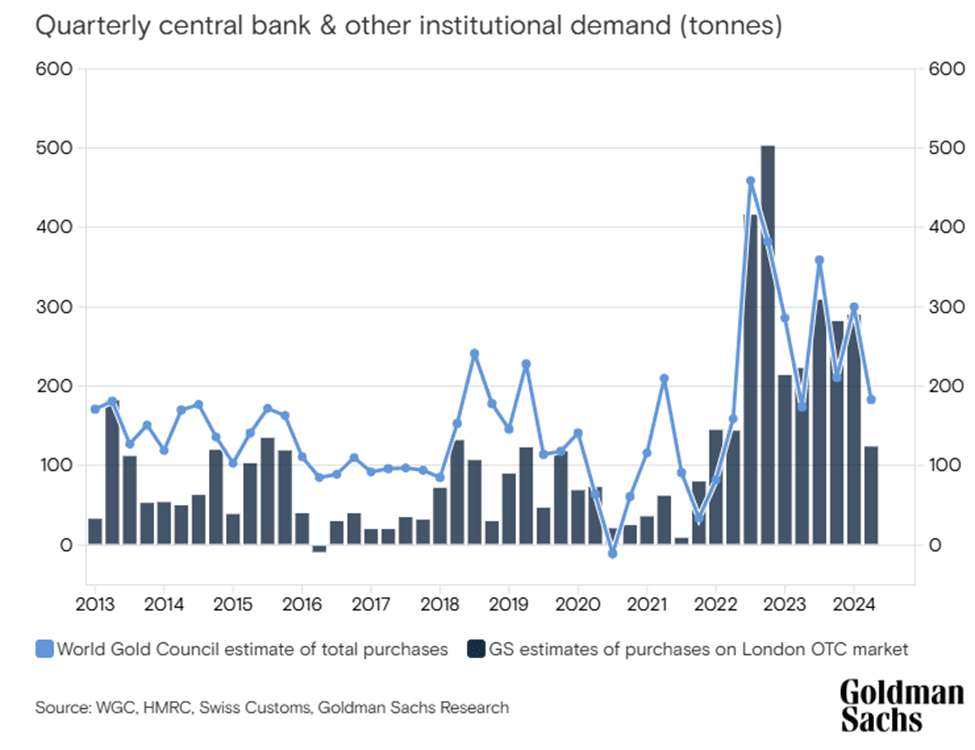
Gold has been the crown jewel of commodity prices with new all-time highs as central banks continue their onslaught of purchases, overwhelming traditional technical factors.4 When interest rates rise, investors tend to sell gold and buy interest-yielding investments. Conversely, when rates fall, investors are more comfortable forgoing interest-bearing options and holding gold. However, that relationship has taken a backseat in the last couple of years as central bank purchases have dominated markets. Central banks around the world have been ramping up purchases of gold to diversify away from dollar-denominated assets out of concern for financial sanctions, following Russia’s invasion of Ukraine.
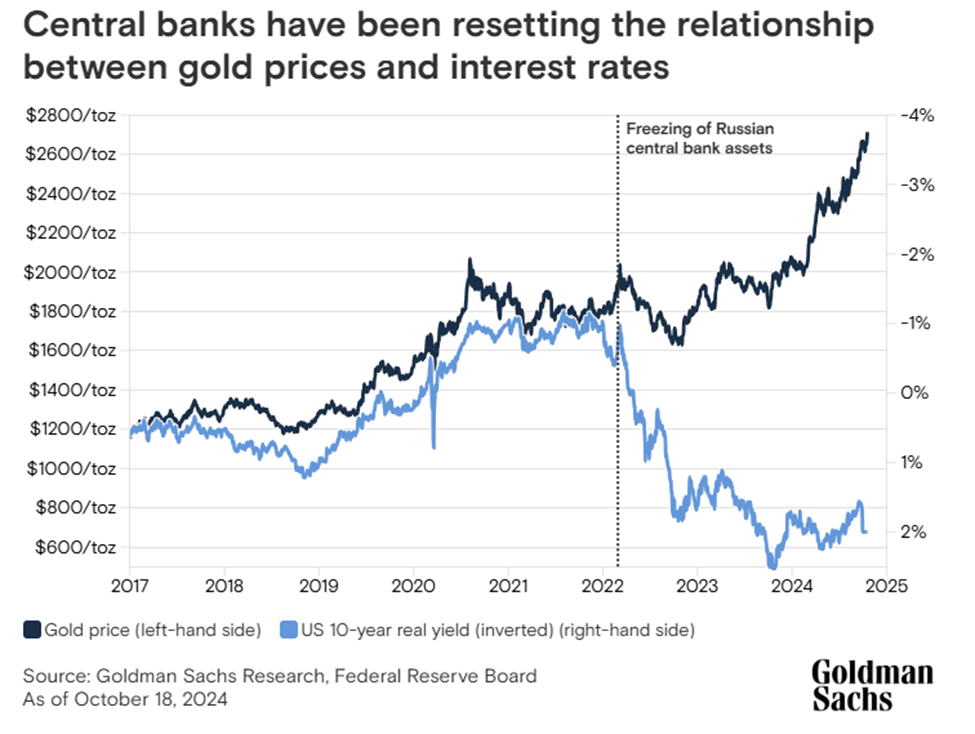
Prior to the U.S. election, western investors were also ramping up their purchases of gold due to the political uncertainty, and gold ETFs had in-flows.1 Going forward, geopolitical uncertainty will have a large impact on gold markets and central banks will hold the keys to the car. If tensions and risks of shocks increase, central banks will likely continue to stockpile bullion and diversify away from dollar denominated assets, driving prices higher. If tensions settle down and risks subside, demand for the safe haven will likely subside and prices will settle down.
Nuclear Option Goes Mainstream
Uranium has roughly tripled over the last few years but has seen extreme volatility along the way. Uranium markets have been linked to the technological and AI revolution that has brought exorbitant demand for electricity with it. To meet this demand, nuclear energy and uranium have seen revitalized interest as big tech innovators have been looking for cleaner power options. Uranium supply has not kept up with the increased demand. The world’s biggest supplier in Kazatomprom has run into production issues as they have worked to increase capacity.5 Other suppliers around the world are working to bring capacity online but face a long road ahead with environmental permitting and mine building yet to come. Uranium supply will likely be constrained for years to come, leaving prices more susceptible to demand which is at the behest of the AI revolution. When DeepSeek signaled to the world that AI might not need nearly as much power and chips as previously thought, Uranium sold off along with AI-exposed names.6 However, big tech has since re-iterated their investment in the space as Microsoft alone has committed $80B to AI and the energy needed to power it.5 Uranium supply is likely to be constrained for years to come and prices are set to be driven by demand and the AI revolution.
Crude Calculations
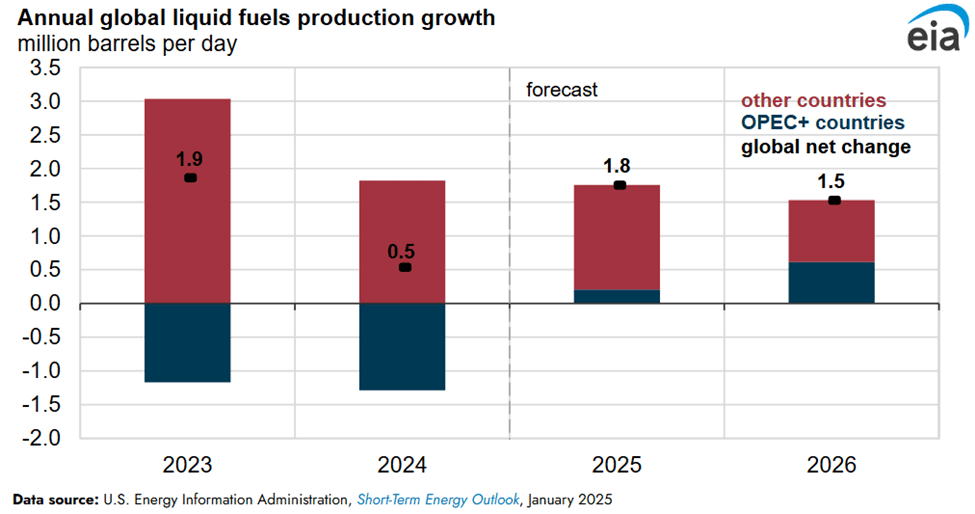
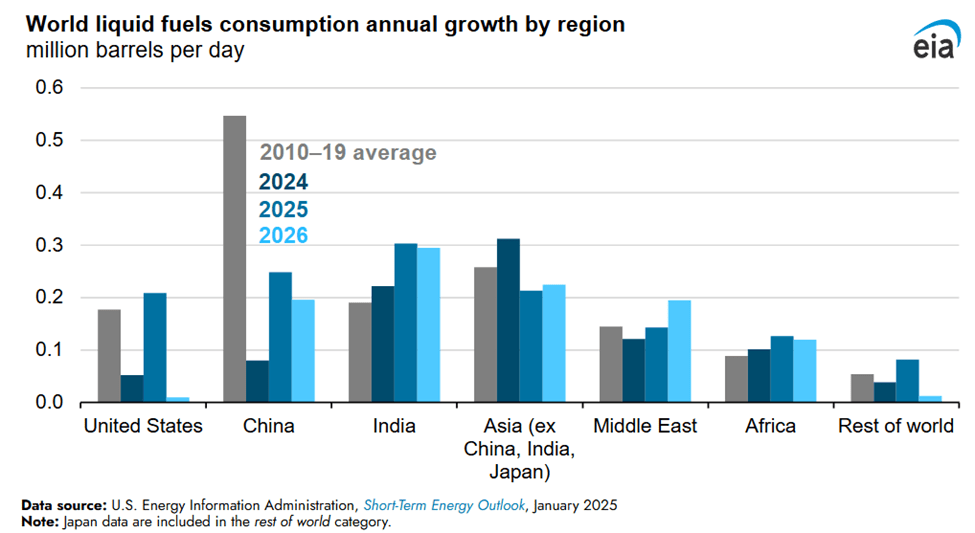
Since the heights of oil prices in 2022, brent crude prices have fallen by roughly 50% as supply has outpaced demand and global petroleum stocks have built up.2 According to EIA, while OPEC+ has committed to reduced production in 2025 and beyond, non-OPEC+ supply is set to continue outpacing demand growth which has been slower than historical averages. Oil prices are set to fall under current EIA projections, but current projections may take a back seat to geopolitical developments. If the war in Ukraine ends, oil prices could crater, and if tensions in the middle east flare up, prices could spike. Traditional supply and demand dynamics point to a lower oil price in the years to come, but geopolitical developments are set to drive oil markets into the future.
Copper's Conundrum
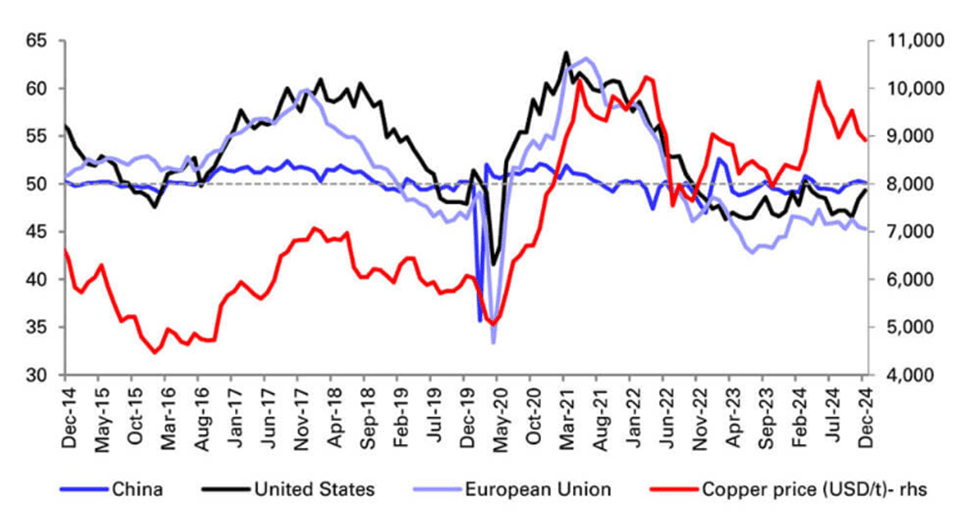
Copper is essential for electrical wiring, and the global energy transition and push for infrastructure development has driven prices higher.3 Underinvestment by producers and inelastic supply has led to demand outpacing production. However, where copper and commodity prices go from here largely relies on trade policies of the Trump administration and the potential impact of U.S. tariffs. Since the U.S. is a net importer of copper, the election of Donald Trump and subsequent tariffs has led to a substantial premium for copper in the U.S.3 An aggressive trade war could stymie global trade and poses downside risk. While supply and demand dynamics point to demand outpacing supply in the years to come, copper along with other commodity prices are likely to be dominated by global trade, and the threat of tariffs poses significant downside risk.
Manufacturing PMIs for China, the US and Europe vs the copper price
2025 Commodity Prices: Where Scarcity Meets Surplus
All eyes are on the AI revolution and the Trump administration as commodity prices largely hinge on tech investment, global trade policy, and geopolitical tensions. Gold prices have broken from traditional indicators as central banks have been buying bullion to diversify away from dollar-denominated assets. If geopolitical tensions persist and sanction risks remain, central banks are likely to drive gold higher. Uranium prices have risen substantially over the last few years as the AI revolution has reinvigorated demand for nuclear energy. Uranium prices fell on the DeepSeek news and rallied on Microsoft’s $80B commitment to AI investment, showing Uranium’s exposure to AI developments. Oil supply is set to continue outpacing demand but price action hinges on geopolitical tensions with Russia and in the Middle East. Copper has benefitted from the long-term energy transition and global infrastructure build out but is at the whims of global trade policies and potential tariffs. Supply and demand dynamics will continue to affect commodity prices, but the impacts of the AI revolution, geopolitics, and global trade policies are more likely to drive commodity prices in the years to come.
Sources:
- “MarketWatch. September 2024. Opinion: Gold is giving you a once-in-a-generation buying opportunity on its way to 4,400”
- EIA. January 2025. “EIA forecasts lower oil price in 2025 amid significant market uncertainties”
- Flow. February 2025. “Commodities Outlook for 2025”
- Goldman Sachs. October 2024. “Gold predicted to climb higher than expected as records shatter”
- Sprott. January 2025. “Uranium Outlook for 2025”
- The Motley Fool. January 2025. “Why Shares of Cameco, Denison Mines, and Uranium Energy All Crashed Today”
From AI-driven nuclear demand to trade war metal shortages, 2025's commodity landscape is shifting beneath our feet.
For financial advisors only.