
Published on February 20, 2025
Go Woke Go Broke: ESG Investments
“Woke is broke,” declared New York Times columnist Maureen Dowd following Donald Trump’s 2024 presidential election victory.1 Hyper political correctness, cancellations, and terms like “LatinX” and “BIPOC” alienated many voters across all demographics, highlighting a cultural reckoning that extends far beyond politics. Consumers have pushed back and rejected many of the social aspects of DEI, ESG, and woke culture in corporations. Investors and red states have re-allocated their funds from corporations and ESG investments that don’t align with their values into ones that do.6 In reaction, companies such as Meta, Walmart, and BlackRock have changed course to address the shift in sentiment. Amid the backlash against the social aspects in ESG investments, environmentally focused funds have had out-flows but maintain high approval ratings. Investor and consumer trends suggest that progressive social causes could continue to fade into the background, environmental initiatives should split from the social progressivism that is dragging ESG investments down, and corporations may continue to re-align their cultures to better reflect consumer and investor preferences.
The People's Portfolio
The 2024 re-election of Donald Trump unearthed a shift of social sentiment that has been brewing in America for years. Democrats believed that people would vote for Kamala Harris because they didn’t like Donald Trump.1 However, with the progressive issues that became associated with Democrats, such as “defund the police” and “abolish ICE,” Americans liked Democrats even less. Donald Trump’s most effective ad showed Kamala Harris supporting taxpayer funded sex change surgeries for prisoners, concluding that Kamala Harris is for “they/them,” Donald Trump is for you. Voters showed up in droves on election day to reject woke social causes, highlighting a cultural backlash that has been building for years.
Corporate America's Cultural Crossroads
Brands have taken social stances for decades to appeal to consumers. The gain typically outweighs the loss as those who disagree with the message lack the motivation and coordination to push back. However, some brands pushed consumers to their limit in recent years. To reach younger, progressive consumers, Bud Light rolled out a campaign with transgender influencer Dylan Mulvaney. The backlash came swift and hard as prominent conservatives led a boycott against the beer. Sales tanked, and Bud Light lost their spot as the top selling beer in America, which they held for 22 years.2
Bud Light's US Market Share Takes a Tumble
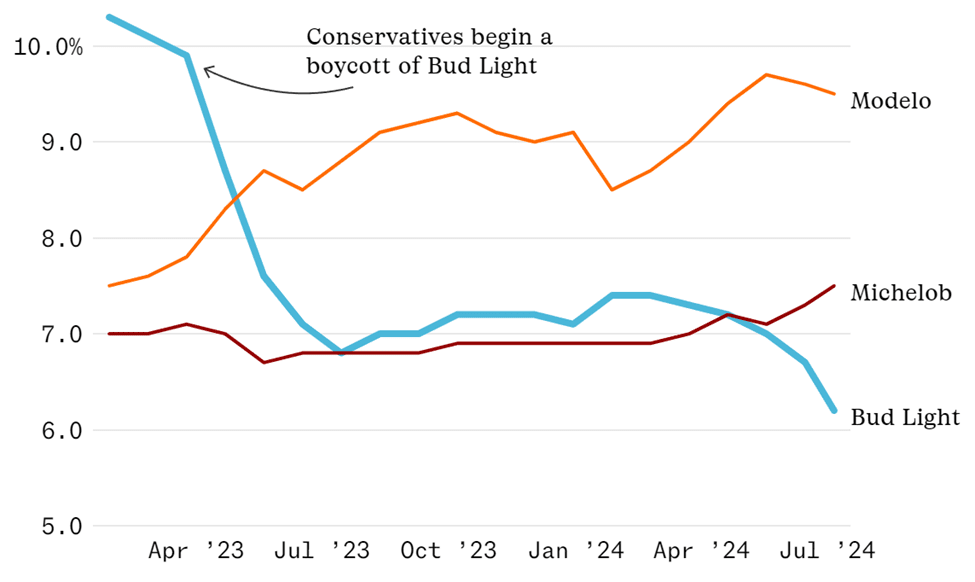
Source: Sherwood News. July 2024. “Bud Light in one chart: A terrible, horrible, no good, very bad year”
Conservative Capital Resist ESG Investments
Investors have been fed up with woke corporate frameworks that integrate progressive social policies into business operations. The number of investors who say that companies pay too much attention to DEI rose by over 35% last year, and those same investors have been making their voices heard.4 Finance officials from fifteen states that manage roughly $590 billion wrote a letter to Fortune 1000 companies supporting an end to DEI. Nineteen Republican-led states pledged to oppose ESG investments in state pensions and other types of investments.5 Texas banned banks from underwriting municipal bonds over ESG policies. Florida divested $2 billion from BlackRock to push back against woke investing.6 To fill the void, investment managers like GuideStone Funds, Inspire, and Knights of Columbus have offered faith-based funds that counter progressive policies and raised billions of dollars.7 Investors have been pushing back against progressive social causes in ESG investments and corporations have been taking note.
Corporations Wave Goodbye to DEI
Large public companies and asset managers have been listening to investor concerns about progressive social causes and changing course accordingly. Mark Zuckerberg announced that Meta will be restoring free speech around issues such as gender and immigration, will replace their “politically biased” fact-checkers with a community notes system in the style of Elon Musk’s X, and is relocating their trust and safety teams from California to Texas.8 Walmart is ending DEI training, shuttering their racial equity center, and pulling out of a gay rights index.9 Other major corporations such as BlackRock, Amazon and McDonald’s are winding down their DEI initiatives as mentions of DEI and "diversity equity and inclusion" in earnings calls have dropped roughly 82% since Q2 of 2021.10 Investors have pushed back against progressive social causes in ESG investments, dragging down popular environmental causes with them.
The Last ESG Investments Standing
Across political affiliations, environmental initiatives remain highly popular.11 Four out of five American investors want financial services companies to invest in sustainability programs such as energy efficiency and reducing carbon emissions, and over half of investors plan to increase environmental investments. While sustainable funds suffered their second consecutive year of out-flows amid the broader backlash against ESG investments, the popularity of environmental initiatives suggests that sustainable funds should detach from the broader “woke” ESG investments movement to experience growth in the future.12
US Sustainable Fund Flows and Assets
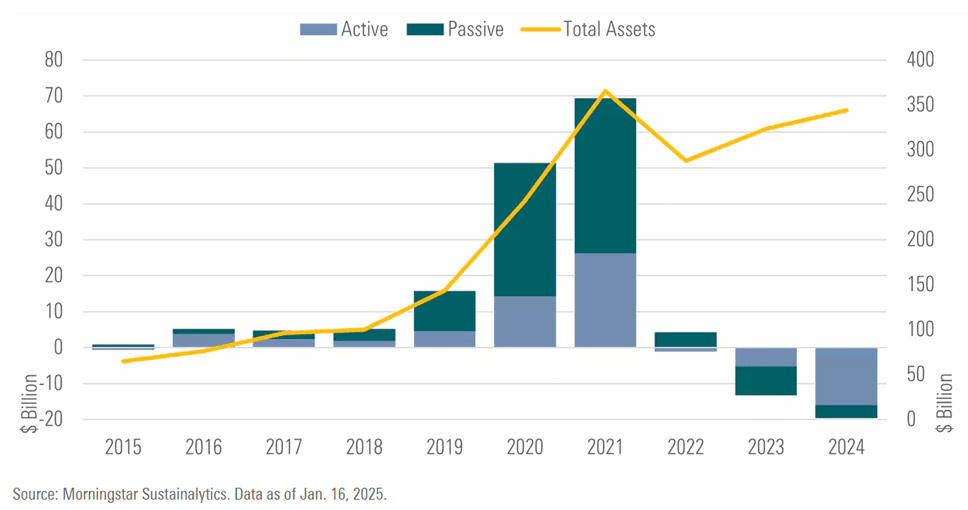
Source: Morningstar. January 2025. “US Sustainable Funds Suffer Another Year of Outflows”
The 2024 election of Donald Trump underscored a social reckoning in America that has been brewing for several years. Voters rejected many of the progressive social causes that have been pushed by prominent politicians. Consumers boycotted brands that did not align with their values, such as Bud Light. Retail investors and conservative states re-allocated funds from “woke” investments into funds that were a better social fit. In response, corporations such as Amazon, BlackRock, and Meta re-aligned their corporate values to better match the populus. Sustainable funds got dragged down by the social backlash against ESG investments but remain highly popular. Investor and consumer trends suggest that progressive social causes may continue to lose support, environmental initiatives should split from broader ESG focuses to gain assets, and corporate America could continue to re-align their values to better reflect the consumers and investors they serve.
Sources:
- The New York Times. November 2024. “Democrats and the Case of Mistaken Identity Politics”
- Inside Beer. January 2023. “Bud Light loses top spot as America’s best-selling beer for the first time in 22 years”
- Sherwood News. July 2024. “Bud Light in one chart: A terrible, horrible, no good, very bad year”
- Harvard Business Review. March 2024. “Lessons from the Bud Light Boycott, One Year Later”
- Barron’s. May 2023. “It’s Not Just Bud Light. How Companies Are Fighting Back Against the War Over ‘Woke.’”
- Reuters. December 2022. “Florida pulls $2 bln from BlackRock in largest anti-ESG divestment”
- Bloomberg. January 2025. “A $24 Billion Fund Puts Its Religious Stamp on Corporate America”
- The Wall Street Journal. January 2025. “Meta Ends Fact-Checking on Facebook, Instagram in Free-Speech Pitch”
- Barron’s. November 2024. “'Anti-woke' Americans Hail Death Of DEI As Another Domino Topples”
- Axios. January 2025. “Which companies are rolling back DEI and which are standing firm”
- Barron’s. September 2024. “The Backlash Didn’t Kill Green Investing. In Fact, It’s Booming.”
- Morningstar. January 2025. “US Sustainable Funds Suffer Another Year of Outflows”
There are several ways for advisors to identify funds that focus on the changing social sentiment, but with any alternative investment, this requires due diligence and institutional management.
For financial advisors only.