
Published on April 1, 2024
Is Investing in Solar Energy Worth It?
Is Investing in Solar Energy Worth It?
Solar panels and other renewable energy sources are cheaper than ever before. But demand for fossil fuels still hasn’t peaked, and oil and gas investments yield consistently high returns. Oil and gas investments come with political and environmental risks, as do investments in the solar sector, the leading renewable energy source. Yet, with government subsidies flooding the market and attracting record levels of private investment, long-term returns from investing in solar energy look strong.1
Why Oil and Gas Returns Are Still Rising
Investors who bet on investing in solar energy in the past few years haven’t seen the returns they hoped for. Inflationary pressures, rising interest rates, and ever-present concerns about a looming recession led the sector to get hit hard: iShares Global Clean Energy ETF, the largest renewable energy fund, is down almost 58% since its January 2021 high.2
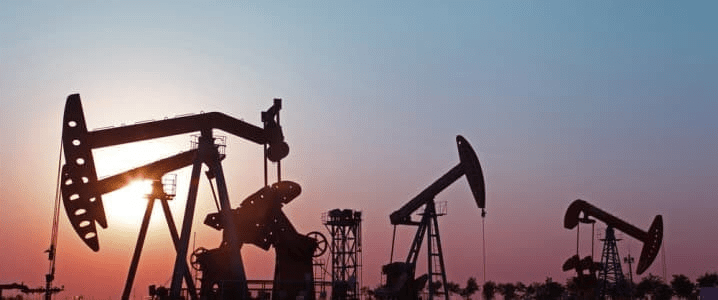
Meanwhile, oil and gas production in the U.S. has hit record highs. Advances in efficiency have led conventional energy producers like Chevron, ExxonMobil, and Shell to beat earnings expectations.3
So, with record levels of investments from governments and private investors going into low-carbon energy production,4 why is this happening? For one, oil and gas companies are still reliable and profitable investments. ExxonMobil, Civitas, Devon Energy, and other oil and gas operators yield dependable dividends, which is attractive in this pricey stock market. And, as the world transitions from using fossil fuels to electricity to power everything from cars to stoves, more energy will need to be produced overall.5
The most predictable way to deliver energy on demand right now is fossil fuels. The sun isn’t always shining, the wind isn’t constantly blowing, and if renewable energy isn’t used immediately, it must often be stored in expensive batteries. Oil and gas, meanwhile, can be drilled and produced on demand.6
Investing in the Energy Mix
In the short term, oil and gas investments are expected to yield consistently high returns.7 But fossil fuels are less efficient as renewable energy sources.8 In the long term, historically unprecedented levels of investment in renewable technologies coupled with continuously decreasing costs have the potential to yield more robust returns.
Renewable energy generators like wind and solar farms can be built in about half the time it takes to get a fossil fuel-powered plant online, which will last longer and generate more energy over their lifetime. Further, delivery of the power they generate doesn’t require costly, often politically prickly, pipeline infrastructure. This shift is already a reality for 67% of the world, where solar and wind are already the cheapest power sources.9
Political and Environmental Risks of Solar Power
Investing in solar energy isn’t without its challenges. It’s estimated that over 95% of the polysilicon used to manufacture photovoltaic (PV) cells in solar panels is sourced from China. Much of China’s polysilicon is produced in Xinjiang, a region that multiple governments have identified as using forced and child labor.10 In response to these reports, the U.S. passed the Uyghur Forced Labor Prevention Act (UFLPA) in 2022, which bans goods from that region of China.
Because polysilicon is often blended from multiple sources, all silicon-based panels made in China may have some raw materials produced using these illegal labor practices.11 Since the U.S. enacted UFLPA, U.S. Customs and Border Patrol has blocked $1 billion worth of solar shipments bound for the American market.
In addition to these political challenges with investing in solar energy, making solar panels is a dirty process. The polysilicon used to make PV cells is commercially produced by reducing raw sand or similar material with some carbon.12 To do this, an electric furnace needs to be heated to an extreme temperature, usually fueled by carbon-rich materials like coal or petroleum coke.13
This energy-intensive process often generates pollution and hazardous materials. It also uses a tremendous amount of water; it’s estimated that manufacturing a two-foot-wide PV panel surface requires about 4,400 gallons of water to cool and clean the machinery.14 While some of the water can be recycled, this is still a tremendous environmental cost, a consideration for investing in solar energy.
Solar Energy Opportunities in Emerging Economies
Over the past decade, a billion more people have acquired access to reliable electricity, mostly in low- and middle-income economies. In building their electric grids, those emerging markets ostensibly skipped petroleum-based energy sources and went straight to renewables by investing in solar energy.
Developing economies are rapidly expanding their new power generation capacity using low-carbon sources because it’s cheaper than ever. Today, photovoltaic (PV) modules, commonly known as solar panels, cost less than one-third of what they did in 2012.15
Investors have shown the most interest in Brazil, India, and South America, attracted by stable and independent clean energy policy institutions. The Brazilian National Development Bank, for example, helped ensure a consistently low cost of debt for clean energy projects. Globally, three times as much investment was spent on expanding solar production in 2022 as development of fossil fuel technology.16
Considerations for Future Investments
As the early generations of PV panels start to be decommissioned at the end of their 30-year lifespan, another potential challenge and opportunity arises: waste.
Raw materials recovered from retired PV panels could be worth as much as $450 million by 2030 and $1 billion by 2050. This has the potential to create tremendous opportunity for secondary market growth as more municipalities and public waste utilities look for ways to dispose of retired PV panels.17
A secondary PV market is already booming in the EU, and regulations require producers to finance the costs of collecting and decommissioning old solar panels. Solar equipment brokers now trade these materials as commodities on B2B exchange platforms.18
France and Korea have also started regulating the amount of carbon emitted through the entire manufacturing process, adding guardrails to investing in solar energy. South Korea has begun classifying solar modules into three grades according to the product’s overall carbon footprint, including its manufacturing. This scoring is now considered in bidding for government projects and is creating a market for ultra-low-carbon solar products.19
In the U.S., much of the solar market growth has been the result of federal tax credits and state sales tax exemptions.20 Consumers often have the choice of purchasing PV panels outright, leasing solar systems for a specified period, or establishing an agreement to buy power generated by the solar energy system at a fixed rate. Fixed-rate agreements, known as energy purchase power agreements (PPAs), offer price security to both the supplier and consumer that wasn’t previously available with traditional electric grids.21
For now, while the market is flooded with subsidies, solar continues to get cheaper, even if this may, in part, be a result of government intervention. An MIT report suggests that this money would have been more efficiently spent if governments rewarded energy output, not investment, as it does with the current tax-credit model.22
Nevertheless, solar production capacity continues to increase, and energy storage capacity costs are decreasing. Some risk management models predict that the cost per watt of solar electricity generated will be halved by 2030.23 For businesses that lock in PPAs now, that’s a mighty good deal.
Sources:
- McKinsey. 2023. “Global Energy Perspective.”
- Blackrock, iShares. 2024. “iShares Global Clean Energy ETF.”
- OilPrice.com. February 2024. “Chevron Returns Record Cash to Investors as Oil and Gas Output Hits New High.”
- World Economic Forum. April 2023. “3 Charts That Show How Much Governments are Spending on Clean Energy.”
- International Monetary Fund. December 2022. “Energy Transitions.”
- Science Direct. April 2023. “Quantifying the Predictability of Renewable Energy Data for Improving Power Systems Decision-Making.”
- International Energy Agency. 2023. “The Oil and Gas Industry in Net Zero Transitions.”
- USC Consulting Group. March 2020. “Energy Efficiency: Are Fossil Fuels or Renewables the More Reliable Source?”
- World Resource Institute. May 2020. “Setting the Record Straight About Renewable Energy.”
- ILAB, U.S. Department of Labor. 2023. “Identifying Goods Produced with Inputs Produced with Forced Labor or Child Labor.”
- Sheffield Hallam University. 2021. “In Broad Daylight.”
- Royal Society of Chemistry. 2024. “Silicon.”
- Journal of Cleaner Production, Science Direct. 2017. “Effect of Raw Materials on the Production Process of the Silicon Furnace.”
- ILUM Energy Solutions. 2024. “How the Solar Panel Manufacturing Process Is Going Green.”
- BloombergNEF. December 2023. “Mobilizing Capital in and to Emerging Markets.”
- International Energy Agency. 2023. “Solar-IEA.”
- IRENA. June 2016. “End-of-Life Management: Solar Photovoltaic Panels.”
- EnergyBin. December 2018. “A Comprehensive Guide to Wholesale Solar Equipment Brokering.”
- Solar Energy. June 2023. “Assessing the Carbon Footprint of Photovoltaic Modules Through the EU Ecodesign Directive.”
- US Department of Energy. March 2023. “Homeowner’s Guide to the Federal Tax Credit for Solar Photovoltaics.”
- Green Power Partnership, The United States Environmental Protection Agency. August 2023. “Understanding Third-Party Ownership Financing Structures for Renewable Energy.”
- MIT Energy Initiative. 2015. “The Future of Solar Energy.”
- PV Magazine. December 2023. “Empirical Approach Shows PV is Getting Cheaper Than All the Forecasters Expect.”
See which funds on our platform are investing in the energy transition.
For financial advisors only.