
Source: FloridaGators.com
Published on October 29, 2024
NIL College Football Poised for a $2.5 Billion Valuation
The fascination and enthusiasm that American college athletics generates is unique. These young adults are not professional athletes but manage to draw tens of millions of eyeballs annually.
College football sits at the top of the college athletics hierarchy, a revenue monster and substantial contributor to the $13.6 billion universities hauled in from their various sports-related channels.
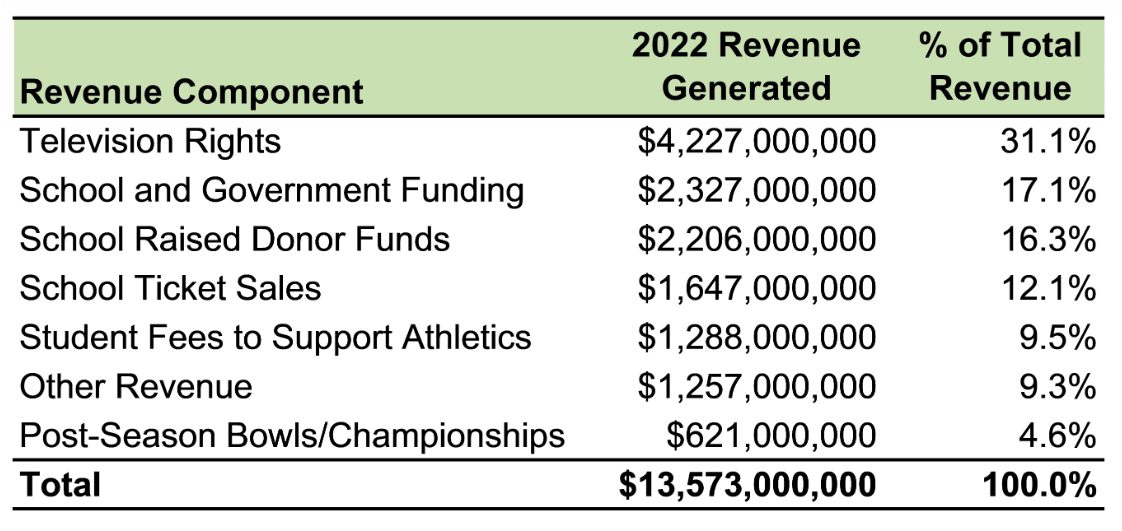
NIL - College Football, Basketball, and More
For decades, the principal argument against compensating collegiate players was that they were student-athletes. The kids received free tuition, board, and a quality education, and in exchange represented the school on the court, field, or other arena. Yet, the money, boosters, and business case became too tempting to be proverbially “left on the table.”
On July 1, 2021, the National Collegiate Association of America (NCAA) created the Name, Image and Likeness (NIL) policy. Student-athletes could now be compensated for their NIL via commercial sponsorships such as TV commercials and social media spots and through private transactions paid directly to the player.
While NIL college football is where the major money lies, athletes of every discipline have found creative ways to cash in:
Livvy Dunne
– A gymnast at Louisiana State, Dunne has over 5 million Instagram followers and is a social media celebrity. She made an estimated $3.9 million last year with major brands such as Nautica and Vuori.
Paige Bueckers
– The University of Connecticut superstar basketball phenom made $1.4 million in 2023 with deals through Verizon, Nike, and Gatorade. Like Dunne, her Instagram followers are the key to brand engagement.
Pay-For-Play
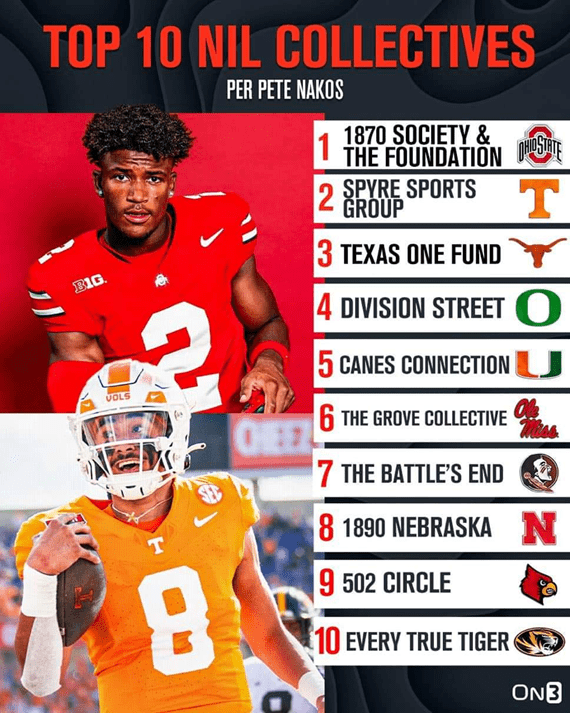
With student-athletes now earning money from their NIL, universities must be careful not to fall into a “pay-for-play” scenario. The vehicle channeling funds to the athlete is known as a NIL Collective. Some collectives are companies, while others are nonprofits. However, last June the IRS issued a memo indicating many of the NIL nonprofit activities only served the players' interests and not a public good.1 A pending crackdown is expected, but many nonprofit collectives continue to engage in business as usual.
The Crimson Collective is the official NIL for the University of Utah and found itself under the microscope over free auto leases provided to players. The collective is a nonprofit and maintains that its purpose is to support established charities such as Junior Achievement and the Make-A-Wish Foundation.2
One of the biggest collectives in the country, the Texas One Fund, supports the University of Texas athletes. The group hosted a fundraising concert in the football stadium in May and still promotes their tax-exempt status online.3
As to be expected, the NCAA and IRS are still ironing out the NIL details. Yet, some high-profile cases have emerged that suggest the regulatory burden will be stiffening. Earlier this year, Florida State University was dinged on NIL college football penalties after an assistant coach was found to have provided a ride to a prospective student to meet with a NIL collective.4 Meanwhile, the University of Tennessee has been embroiled in a nasty feud with the NCAA over a NIL collective’s 2022 recruitment of a student to the tune of an $8.1 million NIL college football contract over four years.5
What are NIL College Football Players Worth?
NIL college football deals are prevalent across the country. But the big money lies in the four largest college football conferences:
- The Big 12
- Atlantic Coast Conference (A.C.C.)
- The Big Ten
- Southeastern Conference (S.E.C.)
Estimates suggest an average of $10.5 million is required to field a title-contending team in any of the above-mentioned conferences.6 The most valued position on a college football team is the quarterback.
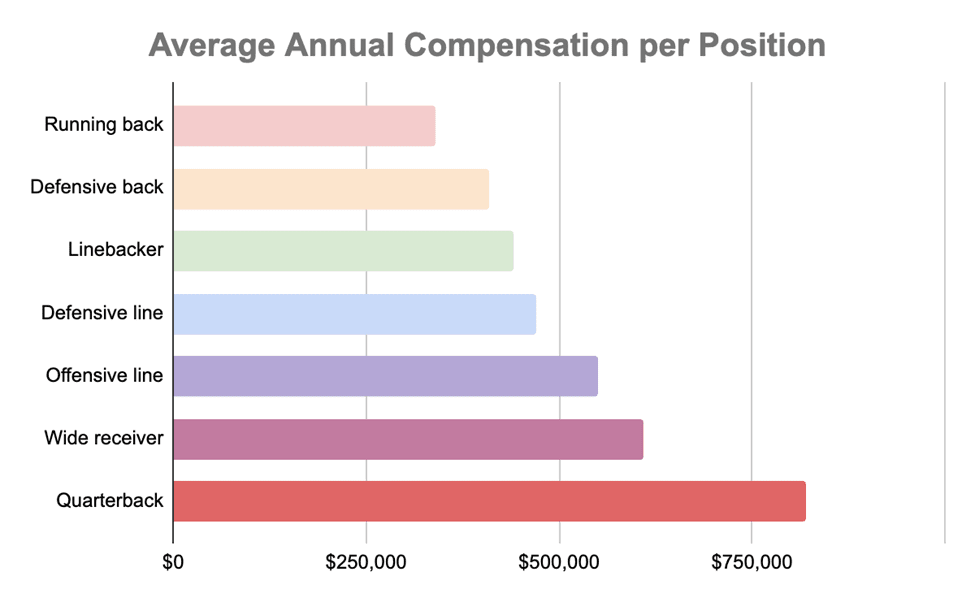
Of the top 20 NIL earners across every collegiate sport, 12 are quarterbacks.7 Shedeur Sanders of the University of Colorado is considered to be a top 5 quarterback who will likely play in the NFL next year. His father, NFL great Deion Sanders, is the team’s coach and Shedeur’s estimated NIL college football value is $5.8 million.8 Shadeur drives a Bentley and has cemented NIL college football deals from some of the biggest brands:
- Nike
- Beats by Dr Dre
- Topps
- Mercedes-Benz
- Under Arnour
- Gatorade
- Urban Outfitters
To Stay or Go?
Pre-NIL, promising athletes would leave college early to be drafted into a major professional league. The incentive was always financial, but NIL deals provide a new level of financial flexibility.
One of the NFL’s most promising rookie quarterbacks is Caleb Williams. Caleb played college football at the University of Southern California and, by some estimates, earned $10 million over two years.9 When Williams announced he might be considering going pro, the rumor was the Chicago Bears would select him. The problem for Williams, however, is he did not want to play for the Bears. A public conversation subsequently played out over the media between Caleb’s father and reporters surrounding Chicago, with Williams’ Dad eventually remarking:
“If there’s not a good situation, the truth is, he can come back to school.”10
Foregoing joining a professional football team to come back to school could only occur in the new NIL world order. The most talented players will inevitably make more money playing professionally, but the pro leagues worry about top players not coming out of school early, like Williams, should they seek to avoid being drafted to a specific team. After all, waiting another year while earning $5 million is certainly an option.
The Expedia of NIL
Two ex-Nebraska football players founded the largest dealmaking platform for NIL college football and other major sports. Opendorse provides collegiate athletes with an easy, one-stop shop for monetizing their NIL rights. Co-founder Blake Lawrence sums up the process in two succinct steps:11
- Create a profile on Opendorse.com
- List all interests and abilities
Businesses, brands, and fans peruse the profiles and pitch how they want to engage with the athlete. If the athlete accepts, the platform handles the contract, tax preparation, and payment. Two years ago, Opendorse released a controversial publication only available to schools, NIL collectives, and talent agencies that are Opendorse partners. The “NIL Book” details expected NIL college football earnings by division and position,12 and has raised antitrust questions with regulators concerned that shared data among competitors could facilitate collusion on compensation.13
Opendorse counters that its aim for transparency benefits players who in turn know their potential worth. Like Expedia, which removed the travel agent from the vacation equation, NIL supporters point to Opendorse’s platform as a democratizing feature for NIL college football deals where agents and middle-men do not hold sizeable sway.
Investment Opportunities
Former NBA star Kendrick Perkins was known as an enforcer for the Boston Celtics. He no longer patrols the hardwood having now transitioned into running the company, Nilly, alongside veteran Wall Street investor Chris Ricciardi.
Nilly offers student athletes upfront money for the exclusive rights to sell or use the athlete’s NIL. During a period of up to 7 years, Nilly and its investors receive anywhere between 10% and 50% of the athlete’s earnings.14
A similar model employed by the company, Vestible, provides investors the chance to purchase shares of a segment of the athlete’s future earnings. “IPOs for college athletes” is how Vestible’s founders describe their business model, and their first client, Denver Broncos linebacker Baron Browning, has already offered investors a share of 1% of future earnings.15
What the NIL Future Holds
Currently in Year 4, the project NIL market revenue increase to Year 5 would represent a 53% leap.
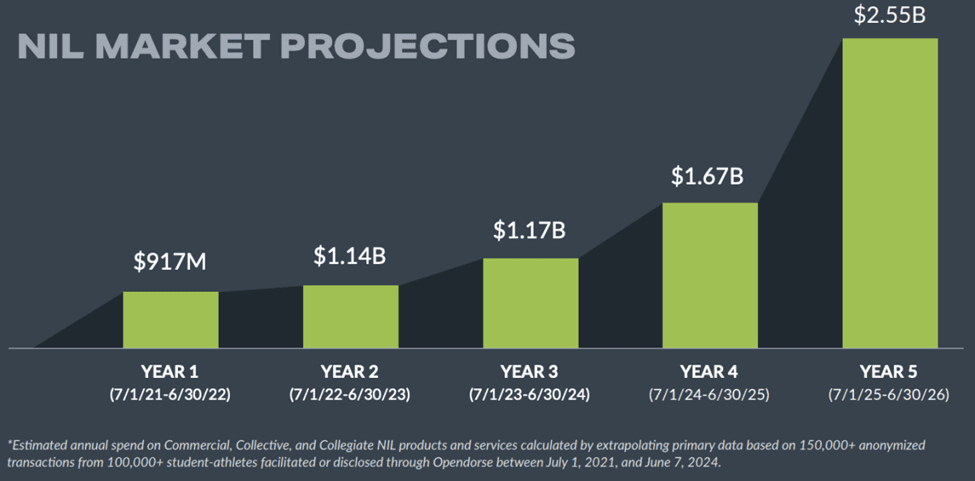
NIL is here to stay, and like most governmental behavior, the state scrambles to regulate after the private sector acts. For now, NIL athletes are considered independent contractors and income over $600 is taxable.16 A potential revenue-sharing agreement is promising universities the right to directly pay athletes up to $23 million per school.17 Should that occur, the tax implications will surely change.
Name, image, and likeness compensation seems fair, considering the amount of money these universities take in through sports. But there is something nostalgic about living in the same dorm as the star quarterback and seeing them walk - not drive a Bentley - to class.
Sources:
- Internal Revenue Service. June 9, 2023. “Whether Operation of an NIL Collective Furthers an Exempt Purpose Under Section 501©(3).
- Beaty, Thalia. July 29, 2024. “Unintended consequences: How NIL in college sports has raised questions about nonprofits.” Associated Press.
- Ibid.
- Ubben, David, and DeMeyer, Tess. February 2, 2024. “What is NIL, how has it changed college sports and why are schools under investigation?” The New York Times.
- Ibid.
- Drape, Joe, and McCann, Allison. August 31, 2024. “In College Sports’ Big Money Era, Here’s Where the Dollars Go.” The New York Times.
- Cottongim, Nick. October 21, 2024. “Top 20 College Athletes With The Highest NIL Valuations.” 93.5 The Fan 107.5.
- Branch, John. October 4, 2024. “What Does College Football Have to Do With College?” The New York Times.
- Sandoval, Ricardo. February 28, 2024. “USC Football: Caleb Williams Reportedly Made Millions in NIL Deals.” Sports Illustrated.
- Schube, Sam. September 6, 2023. “The New King of College Football.” GQ Sports.
- Yahoo Finance Video. July 1, 2021. “How Opendorse helps NCAA Athletes profit off their name, image and likeness.” Yahoo Finance.
- Dellenger, Ross. December 7, 2022. “NIL Platform Opendorse Announces New ‘NIL Book’ to Help Navigate Landscape.” Sports Illustrated.
- Edelman, Marc. December 9, 2022. “Sharing of College Athlete N.I.L. Data Raises Interesting Antitrust Questions.” Forbes.
- Murphy, Dan. October 8, 2024. “New NIL company raises red flags for consumer finance experts.” ESPN.
- Ibid.
- Shaw, Tim. May 3, 2023. “Name, Image, & Likeness Revisited: Where We Are Now.” Thomson Reuters.
- Ibid.
See our roster of institutional private market funds.
For financial advisors only.