
Published on January 24, 2025
PE and family-owned businesses are getting cozier
US family and founder-owned businesses account for roughly 83.3 million jobs.1 The size and scope of the firms vary, but the sector has long been a strategic engine of the economy, making family-owned businesses an attractive segment to invest in.
On the investment side, private equity (PE) has been steadily increasing its position in family- owned businesses. These firms have always accounted for a large share of PE acquisitions, but the focus as of late has turned to more traditional family-owned businesses, such as consumer services companies, logistics and supply chain firms, HVAC repair companies, and even pet stores. Many of these businesses have room for consolidation, and 2025 is shaping up to be a consequential year for PE and family-owned businesses.
Dry Powder Awaits PE and Family-Owned Businesses
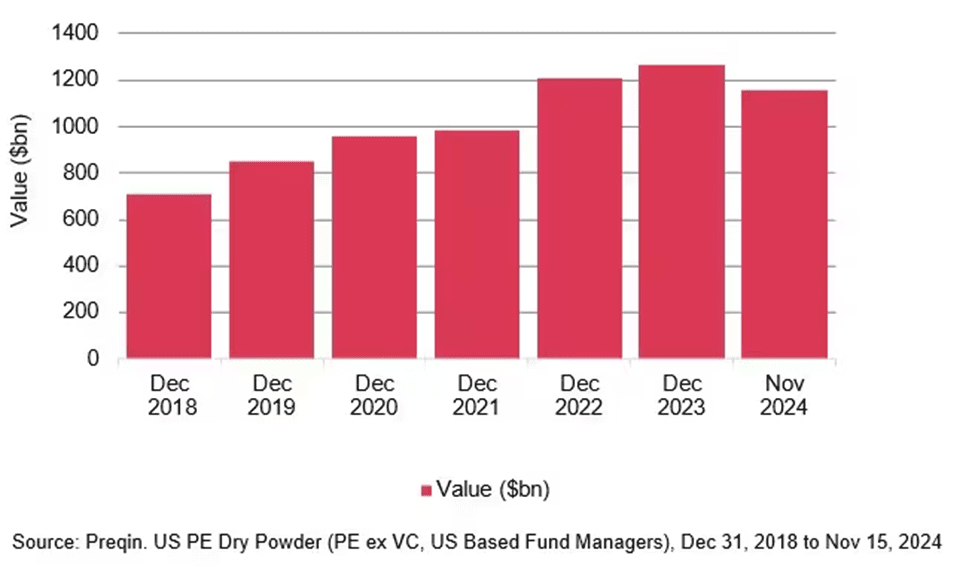
During 2020 and 2021, PE funds racked up hundreds of billions of dollars. From mid-2022 to mid-2024, elevated interest rates impeded deal-making, which has increased pressure on funds to invest their “dry powder” in 2025.2
The US PE sector’s market size is expected to surpass $1 trillion by 2032. Of the top 20 PE funds worldwide, the US is home to 16 of them. Blackstone Inc., KKR, and TPG Inc. rank numbers 1, 2, and 5,3 respectively, and purchases of family-owned businesses (valued at > $100M) were already well above average levels during 2023.4
US Private Equity Market and Size, 2018-2032 (USD Billion)
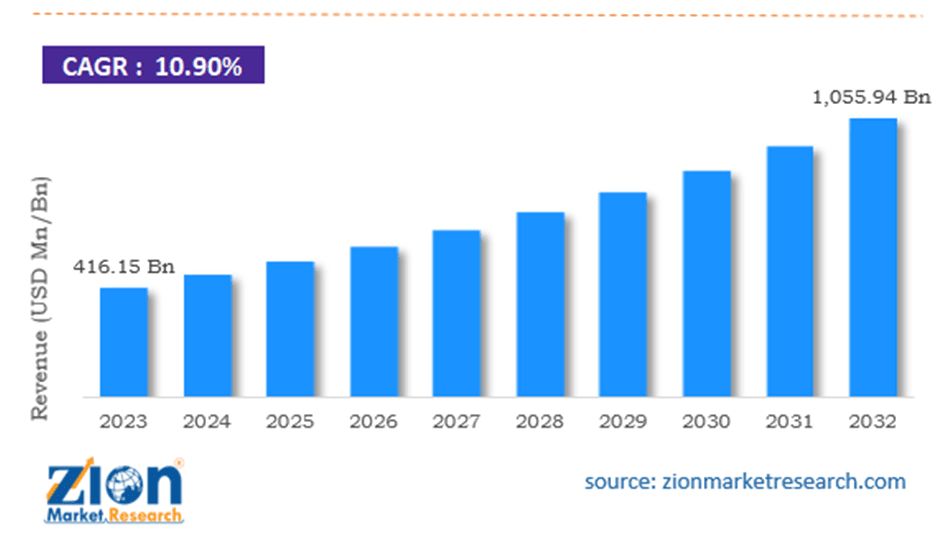
Source: Zion Market Research. 2023. “US Private Equity Industry Prospective.”
Finding the Middle for PE and Family-Owned Businesses
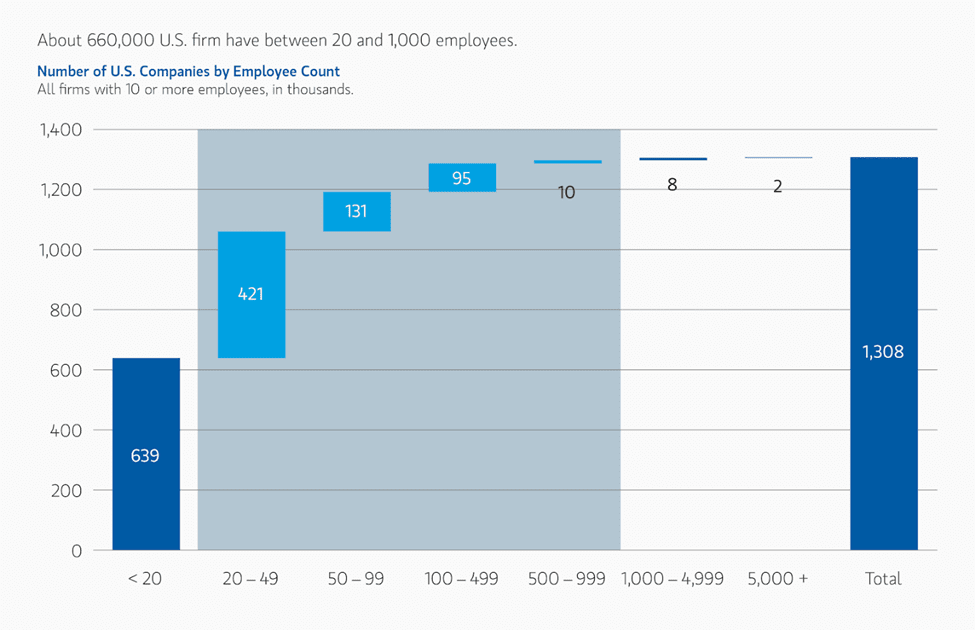
The middle-market is typically defined as companies with anywhere between 20 to 1,000 employees. Many of these companies are family or founder-owned, and Morgan Stanley posits three hypotheses as to why the middle holds so much upside for PE and family-owned businesses:5
- Headroom for Growth
- A small market share translates to greater opportunities to attract new customers, create new products, open new markets, or some combination of all three.
- Margin Expansion
- Scaling up to reduce vendor costs and driving efficiency as the company develops provides sizeable opportunities to expand margins.
- Meaningful M&A
- Add-on acquisitions in smaller, more fragmented, markets can drive significant equity value creation.
Small and mid-sized private companies are a rich target landscape for PE
Where Roll-Up Strategies Work Best
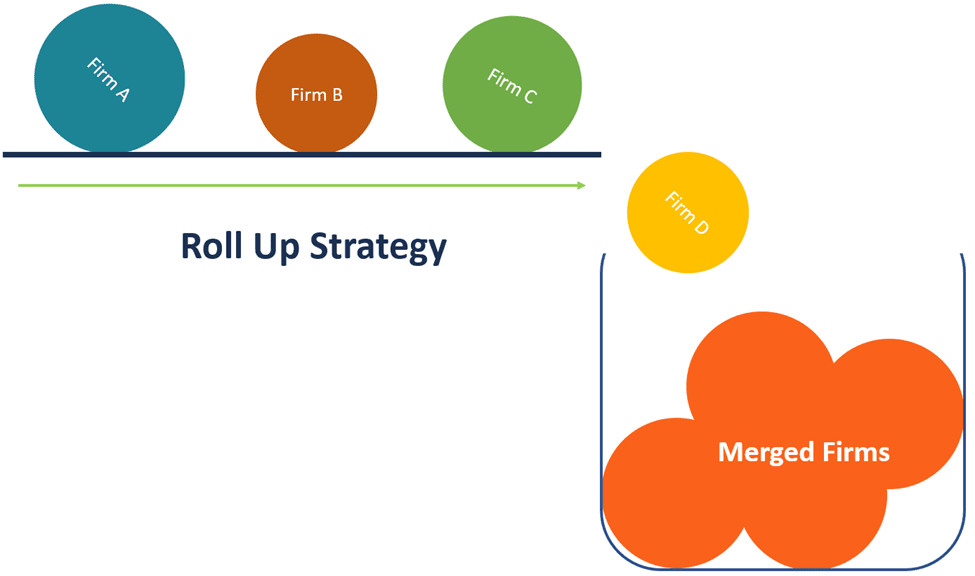
When PE and family-owned businesses cross paths, the purchasing fund will frequently target ancillary businesses to roll into the main business. A well-planned roll-up strategy of family or founder-owned businesses produces economies of scale, enables cross-selling of a wider range of products, and aggregates resources and revenues.
It was an understatement to say the logistics and supply chain services sector was in disarray after Covid. Yet, the sheer volume of small freight and delivery service providers are a matchmade in heaven for middle-market PE funds. Smaller companies are available at more attractive valuations and rolling up a handful of firms can result in higher price/earnings multiple.6
The consumer services sector is another hot target for PE and family-owned businesses. Through the first half of 2024, consumer and retail investing accounted for 45% of the total deal count.7 Roughly 80% were valued at $50 million or below, and like the logistics and supply chain services sector, the consumer services contain a plethora of small business ventures that spread over the home service, fitness, and beauty sectors. Rolling these into a “brand name” streamlines marketing and advertising efforts, as well as operational synergies.
Benefits for Reluctant Owners
Letting go of a family-owned business can be a tough pill to swallow. The main reasons owners look to PE are economic uncertainty, succession planning issues, or the realization that the business has run its course and cannot scale without additional investment. Simply put, private equity can afford plenty of benefits for a business:
-
Retention of “Control”
“Control” is in asterisks, as PE funds generally encourage owners to maintain a managerial role and an equity interest in a PE and family-owned business acquisition. Many family-owned or founder business owners prefer to retain a semblance of control, which also incentivizes good performance tied to an eventual future payout.
-
Operational Support
In a family business where management is not yet ready to retire but perhaps overwhelmed with the operational side (hiring, sales team development, researching new channels, etc), PE provides cash and operational support, which can free the owner to focus on more strategic growth areas.
-
“Buy and Build” Partner
PE and family-owned businesses can leverage their partnership to “buy and build” additional companies to grow. For owners with limited resources, PE focuses squarely on growth and brings networking resources and best practices that most family-owned businesses do not have access to.
Conclusion
Only 40% of family-owned businesses make it to a second generation of ownership.8 Moreover, a recent First Bank family business survey revealed just 27% of family-owned businesses have a succession plan in place.9
Coverage of PE and family-owned businesses with unflattering headlines such as “Private Equity is Gutting America - and Getting Away With It”10 or “What is private equity, and why it is killing everything you love?”11 don’t necessarily engender goodwill from family-owned businesses exploring their options. But the benefits are not negligible for family-owned businesses, and as the Baby Boom generation continues to advance into retirement age, the supply of family-owned and founder businesses is expected to keep growing.12 A more favorable regulatory environment in 2025 could help keep the momentum going.
Sources:
- Family Enterprise USA. November 28, 2023. “Family Businesses: 74% Thrive 30+ Years, Reveals Research.”
- Kreutzer, Laura. January 3, 2025. “Private Equity’s 2025 ‘Dry Powder’ Countdown.” The Wall Street Journal.
- Private Equity International. June 3, 2024. “PEI 300: The world’s largest private equity firms.”
- Sasso, Michael. July 12, 2023. “Why Private Equity Is Chasing Plumbers and Lumber Yards.” Bloomberg.
- Sack, Aaron, and Whitehead, Patrick. January 2024. “The Founder Advantage: Finding Alpha in Middle-Market Private Equity.” Morgan Stanley Capital Partners.
- Bowman, Robert J. August 15, 2022. “Why Private Equity Investors Are Targeting the Chaotic Supply Chain Sector.” Supply Chain Brain.
- Miller, Emily, and Tillen, Charles. October 2024. “Signs of Hope in Private Equity Consumer Investing?” Bain & Company.
- Cornell SC Johnson College of Business. “Family Business Facts.”
- First Bank. March 1, 2024. “First Bank Center for Family-Owned Businesses: 2024 Family Business Survey Findings.”
- Ballou, Brendan. April 28, 2023. “Private Equity Is Gutting America – and Getting Away With It.” The New York Times.
- Stewart, Emily. January 6, 2020. “What is private equity, and why is it killing everything you love?” Vox.
- Sack, Aaron, and Whitehead, Patrick. January 2024. “The Founder Advantage: Finding Alpha in Middle-Market Private Equity.” Morgan Stanley Capital Partners.
View the institutional private investments on our platform and build customized portfolios for your clients.
For financial advisors only.