
Published on June 2, 2025
Portfolio Diversification Strategies in Uneasy Times
Are we back to “normal?” After a complete battering from the tariff shocks, May 15 marked year to date (YTD) positivity of the S&P 500 and Nasdaq 100. In many respects, President Trump beat himself, while the rest of the world watched portfolios ebb and flow tumultuously.
Markets have calmed somewhat, but we’re not out of the woods yet. If the first half of 2025 has taught us anything, it’s that portfolio diversification strategies are going to be “the theme” for the foreseeable future.
How Alternative Investments Compare
Since 2011, global stock holdings have performed well. However, positions in alternative investments such as private equity and others have outperformed or provided comparable returns.
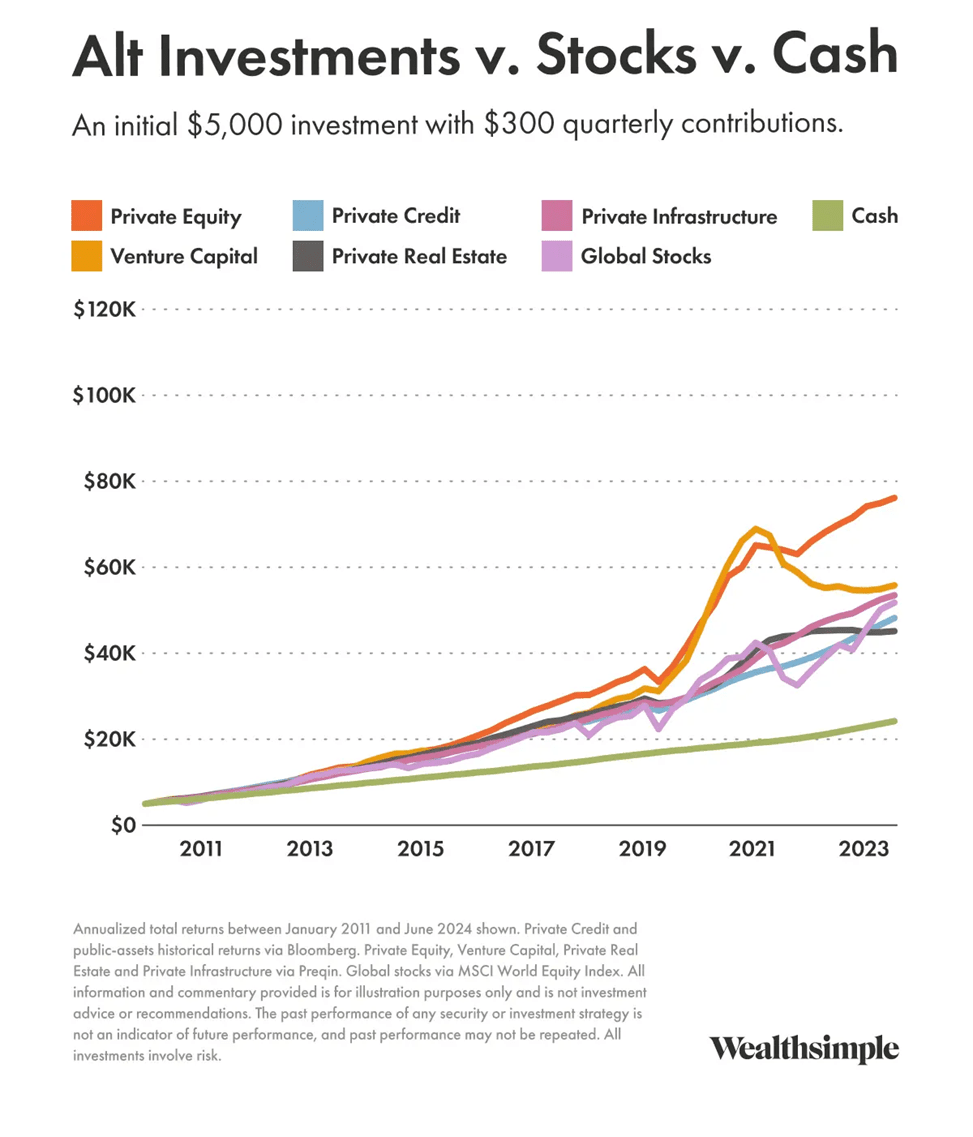
Private equity (PE), private credit, digital assets, real estate, and more are now commonplace in retail (everyday) investor portfolios. In the present environment, on-again/off-again tariffs, a potential economic slowdown, and differing degrees of recessionary risks have introduced considerable volatility to public markets.
One benefit of private markets and alternative assets is that they do not price off volatility and sentiment - they price off fundamentals. Liquidity levels vary based on the duration of the asset, and those who can afford to surrender a bit of liquidity for a period of time can expect enhanced returns and decreased volatility.
Portfolio Diversification Strategies - 3 Things to Watch
1. Real Estate
The US faces a well-documented housing shortage. But alternative property types within the larger real estate sector are also garnering attention.
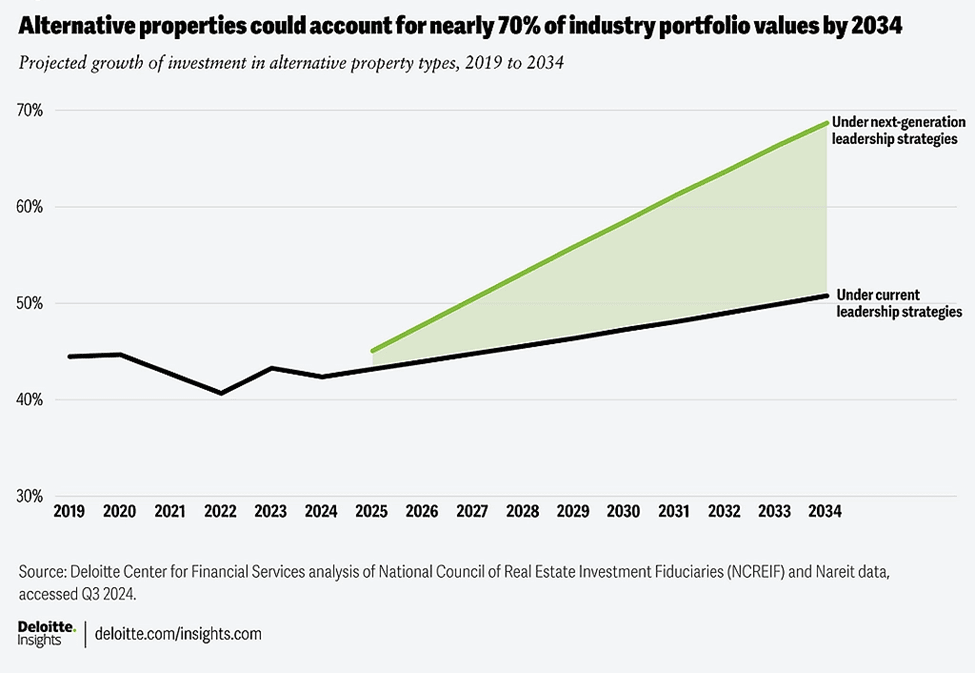
In addition to single-family rentals, self-storage facilities and senior and student housing are expected to grow in demand. Alternatives achieved 11.6% annualized returns over the past decade compared to 6.2% for traditional properties.1 Moreover, an interesting data point emerged in Deloitte’s 2025 Commercial Real Estate Outlook survey:
- Participants 40 years of age and younger responded nearly 10% more frequently than their older counterparts that alternative property types would present the greatest opportunity moving forward.2
These younger leaders will be ushered into managing roles over the next decade as roughly 60% of current leaders near retirement. The last public student housing real estate investment trust (REIT) went private in 2022, essentially ending the period of publicly traded student housing REITs. Interest rates aside, real estate warrants a critical eye.
2. AI-Led Opportunities
Portfolio diversification strategies often rest on new technology. An estimated $1 trillion plus will be needed to roll out AI infrastructure over the coming five years.3 Everything from electricity generation, transmission, and storage is in hot demand, relying increasingly on private capital for financing.
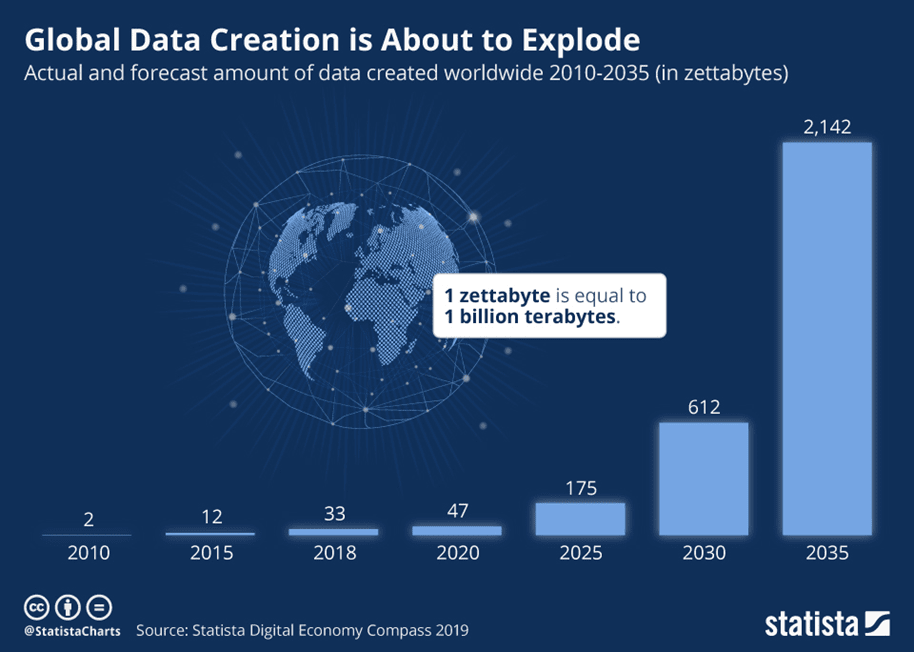
Privately held power generators are more nimble than their public peers in ramping up capacity. In general, private markets have been dominated by sovereign wealth funds, endowments, ultra-high-net-worth individuals, and pension funds. Private equity firms can get bogged down in trillions of dollars held in illiquid assets, which has shifted their focus to a new investor base - retail investors.
The estimated amount of US adults with investable assets between $100,000 and $1 million numbers an impressive 110 million.4 AI infrastructure is another area that is expected to continue generating attractive returns.5
3. Deregulatory Efforts
The President had highlighted his intent to prioritize deregulation. But then came the tariffs, leading many investors’ portfolio diversification strategies into “wait and see” mode. The quantity of public companies is contracting, and according to BlackRock, 81% of US companies with over $100 million in revenue are privately held.6 While many of the larger companies operate in an “AI universe,” they represent a host of industries - social media, data analytics, defense tech, design, autonomous vehicles, fintech, and more.
- ByteDance ($220 billion)
- OpenAI ($157 billion)
- Stripe ($70 billion)
- Databricks ($62 billion)
- Anthropic ($61.5 billion)
- xAI ($50 billion)
- Waymo ($45 billion)
- Epic Games ($31.5 billion)
- Canva ($26 billion)
If the Administration can settle into acceptable tariff rates that are consistent, and shift in a more aggressive deregulatory direction, capital spending should follow which will be a win for private equity.
Crypto's Argument
The Administration’s Executive Order 14067 - Strengthening American Leadership in Digital Financial Technology - provides a framework to integrate cryptocurrency into traditional investment structures.7 Game-changing legislation is now moving through the Senate with bi-partisan support that would require stablecoins to be fully backed by dollars or comparably liquid assets.8
Benefits of Cryptocurrencies:
- Portability of Security
- Blockchains are accessible via private keys and are “borderless.” Asset seizures, for example, in unstable countries or regions, are impossible.
- Inflation Hedge
- Some cryptocurrencies such as Bitcoin have a limited supply. This creates scarcity and makes it resistant to inflationary pressures. Other currencies like Ethereum and Stellar are not capped, but they can implement monetary policies to maintain price stability and control inflation.
- Privacy
- While blockchain transactions are transparent, they do not reveal ownership. This is again beneficial in unsettled regulatory environments.
Venture capitalists have been ploughing capital into the crypto market - an 84% jump so far over 2024.9 FifthThird Bank is now considering expanding its crypto operations, using stablecoins to assist with cross-border transactions.10 Moreover, the Fed, in conjunction with the Federal Deposit Insurance Corporation and the Office of the Comptroller of the Currency, have joined to withdraw previous statements that advised banks to take caution with cryptocurrency activities.11
Portfolio diversification strategies with cryptocurrencies should be regarded more as an “asset” as opposed to a currency. Cryptocurrencies are not widely accepted in retail transactions and swing wildly, so their role in a portfolio would be that of an “alpha generator.”12
Portfolio Diversification Strategies and Your 401(k)
BlackRock’s Larry Fink envisions a future balanced portfolio that is less 60/40, and more 50/30/20:
“The future standard portfolio may look more like 50/30/20–stocks, bonds, and private assets like real estate, infrastructure, and private credit.”13
The portfolio diversification strategies of university endowments, like 401(k)s, have long time horizons.
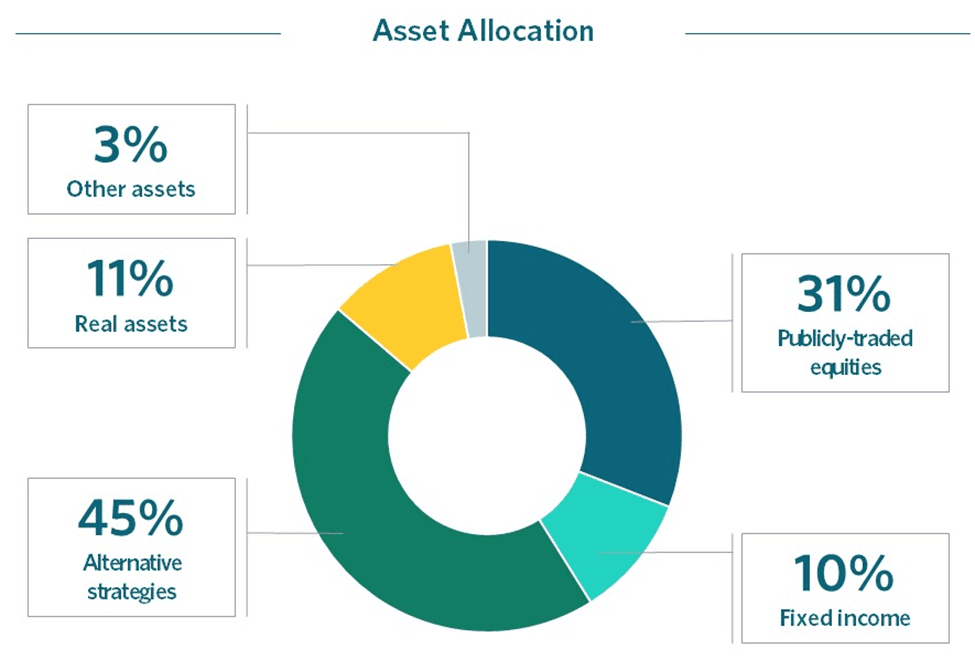
While portfolio diversification strategies aimed at dedicating 45% to alternatives is not for every individual 401(k) holder, somewhere between 10 and 20% is reasonable.
Empower is the second-largest provider of US workplace retirement plans. Earlier in May, the company announced a multi-partner deal with the private investing behemoths Partners Group and Apollo Global Management among others to begin allowing private equity, credit, and real estate in some of the accounts Empower manages.14 401(k) plans typically hold public stocks and bonds, and many employers have been reticent to wade into private investments due to liquidity constraints and the valuation learning curve. Portfolio diversification strategies, however, are leading the change with five companies already signed on with Empower.
During Trump 1.0, the Labor Department issued guidance around private equity within 401(k) plans. The Biden Administration, by contrast, noted that it “did not endorse or recommend such investments,”15 but optimism remains that the current administration will continue working towards portfolio diversification strategies that include private investments in 401(k) plans.
Conclusion
The country received some sour news on Friday, May 16. Moody’s Ratings downgraded the US of its triple-A credit rating citing growing fiscal deficits and increasing interest costs. Meanwhile, the trade war is less dire than a month ago, but the next several months could remain highly uncertain.
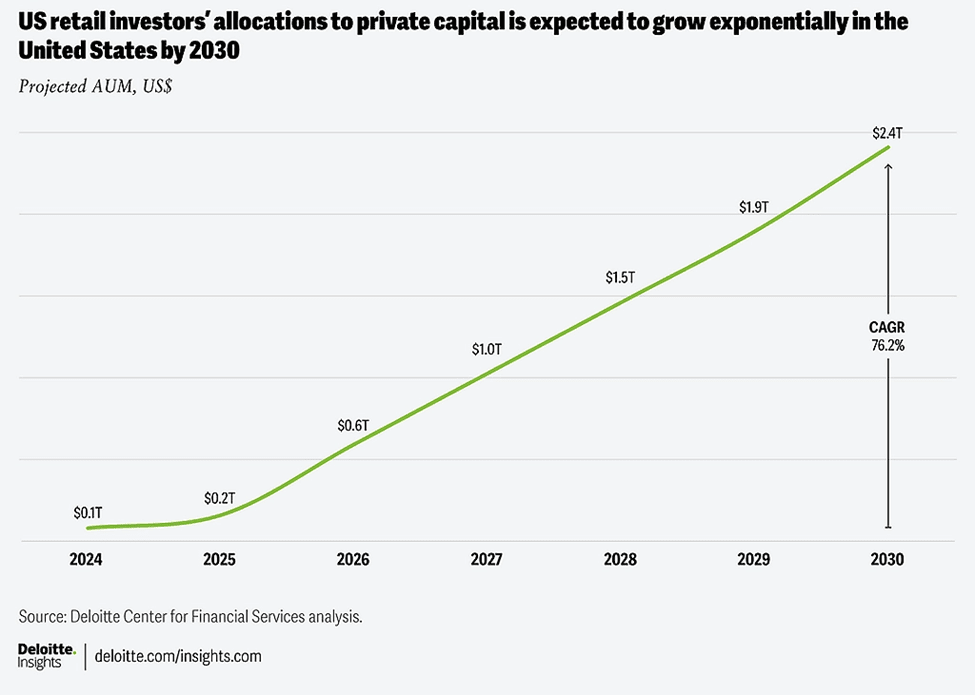
Portfolio diversification strategies into private markets is a sensible strategy moving forward. Nothing is risk-free, but stocks and bonds are not delivering like they used to, and a well-balanced portfolio can help smooth short-term volatility and weather future storms - we know they won’t let up.
Sources:
- Turner, Darin. Winter 2023. “The Growing Role of Specialty Sectors in Real Estate Portfolios.” PREA Quarterly.
- Coy, Tim, Florio, Nathan, and Wojteczko, Mark. April 24, 2025. “Next-generation leaders may accelerate real estate investment in alternative properties.” Deloitte Financial Services.
- Dell’Oro Group. August 1, 2024. “AI Infrastructure Spending Forecast to Be Over a Trillion Dollars Over the Next Five Years, According to Dell’Oro Group.” PR Newswire.
- Fox, Eric, and Collins, Sean. April 24, 2025. “Increasing retail client exposure to private capital investing.” Deloitte Financial Services.
- Mulvihill, Aaron. December 11, 2024. “How is the AI building boom fueling opportunities in private energy infrastructure?” J.P. Morgan Asset Management.
- Norton, Leslie P. April 15, 2025. “5 Questions About Private Markets and Your 401(k).” Morningstar.
- The White House. January 23, 2025. “Strengthening American Leadership in Digital Financial Technology.”
- Wynn, Sarah. May 19, 2025. “Senate votes to move forward on landmark stablecoin legislation.” The Block.
- Johansson, Eric. May 16, 2025. “Crypto startups to lure $18bn in VC funding as experts see ‘a lot more activity.” DLNews.
- Cryptopolitan. May 17, 2025. “Cincinnati’s Fifth Third Bank expands crypto push as US rules take shape.”
- Insights, May 2025. “Cincinnati’s Fifth Third Bank expands crypto push as US rules take shape.”
- Manley, Jack, and Gauba, Sahil. December 4, 2024. “Does crypto deserve a place in portfolio construction?” J.P. Morgan Asset Management.
- BlackRock. January 14, 2025. “Larry Fink’s 2025 Annual Chairman’s Letter to Investors.”
- Tergesen, Anne. May 14, 2025. “401(k) Giant to Allow Private Markets Investments in Its Retirement Portfolios.”
- The Wall Street Journal.
See the private market funds listed on our platform and learn how you can build customized portfolios for your clients.
For financial advisors only.