


Published on June 10, 2024
Space Innovation: The Rise of the Commercial Space Industry
Commercial space innovation impacts billions on Earth daily, with seven billion satellite-enabled global smartphones currently in use.10 Space data permeates every aspect of our lives. Its influence spans a range of areas, from supporting Electric Vehicles (EVs), Internet of Things (IoTs), 5G, and 6G to providing real-time data on climate, agriculture, and disasters through satellite constellations and private space tourism. Venturing into an exciting journey beyond our planet, the commercial space industry is no longer exclusive to scientists and astronauts. It has unlocked new and promising investment prospects for everyday individuals eager to participate in a space-age revolution. In this article, we will explore the industry’s current state, potential for growth, and investment opportunities.
Potential growth to $1 trillion
The top three players in this industry are the U.S., China, and Europe, with the U.S. dominating both civil and defense spending in space, accounting for 60% of total spending. Also, more countries are now contributing to overall space spending compared to the past.4
The commercial space industry is experiencing unprecedented growth fueled by technological advancements and reduced launch costs. According to McKinsey, the space market has expanded to approximately $447 billion, a significant increase from $280 billion in 2010. Projects indicate potential growth to $1 trillion by 2030. As an illustration of growth, the number of active satellites could triple within the next decade.8
Historical and Projected Space Market Size
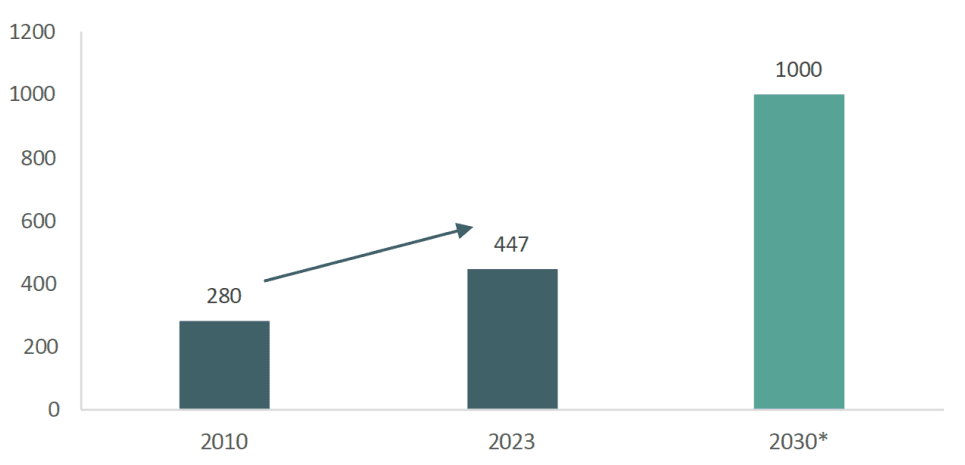
Figure 1. Historical and projected space market size (in $ billion)
Source: McKinsey & Company
According to the Satellite Industry Association’s annual report for 2023, a total of 2,325 commercial satellites were deployed in 2022, a 3% increase compared to the previous year.10 Furthermore, the advent of reusable rocket technology, pioneered by Elon SpaceX, has reduced the cost of launching objects into space and led to a significant surge in the number of objects launched into space.
Annual Number of Objects Launched into Outer Space
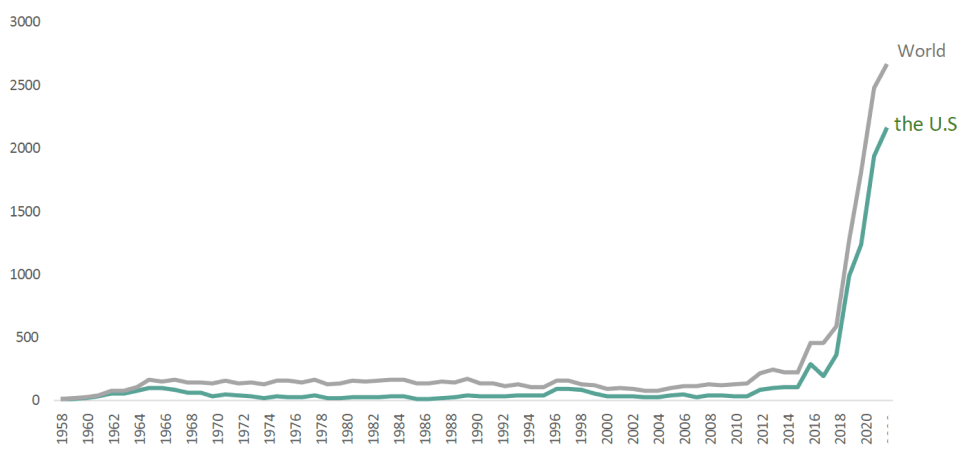
Figure 2. Annual number of Objects Launched into outer Space
Source: United Nations O9ice for Outer Space A9airs
Investment growth: Not just about exploring space. It’s a business!
Significant investment opportunities are no longer limited to access by government space agencies. The industry is experiencing remarkable growth due to new products, diverse sources of private funding, and emerging technologies. Currently, as government space agencies have scaled back their ability to send humans into space, private enterprises are making “exciting inroads into the fields of human space exploration.”13
Space Related R&D Expenditures By Sources
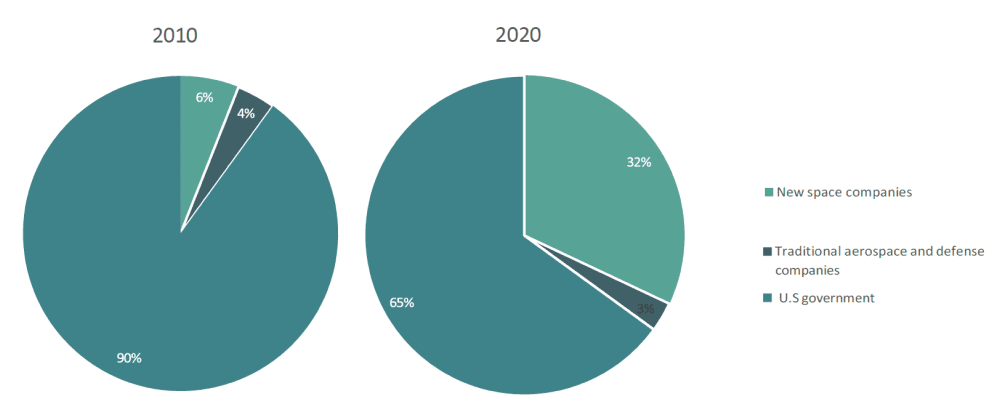
Figure 3. Space related R&D expenditures by sources
Source: McKinsey & Company
Satellite & Space Tourism
The space sector has witnessed a surge in private sector investment, with an increasing number of venture capital and private equity firms directing funds into space-related ventures. By the end of 2022, the global space sector had garnered approximately US$272 billion in private equity investments, benefiting 1,791 companies since 2013.11 Satellites and Space Tourism are the two most promising industries with high growth potential in the commercial space innovation sector.
Equity Investment by Investor Type
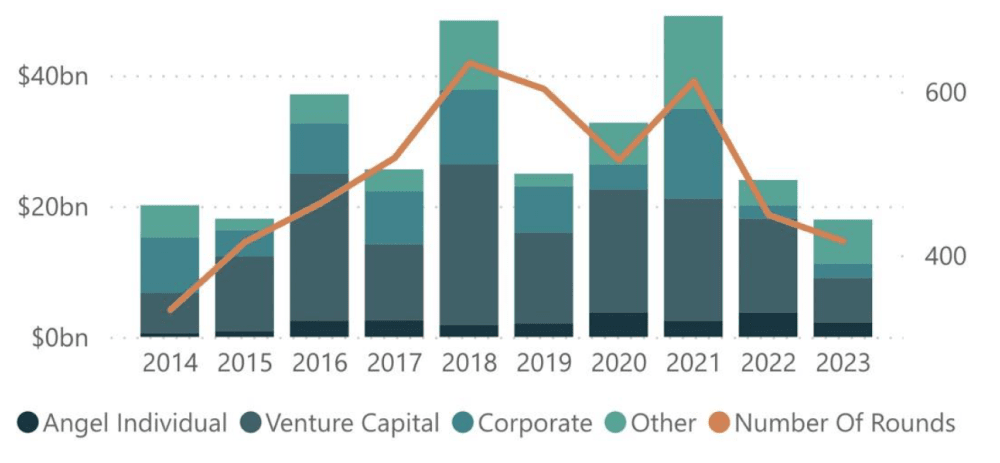
Figure 4. Equity Investment by Investor Type
Source: Space Capital
Satellite Industry
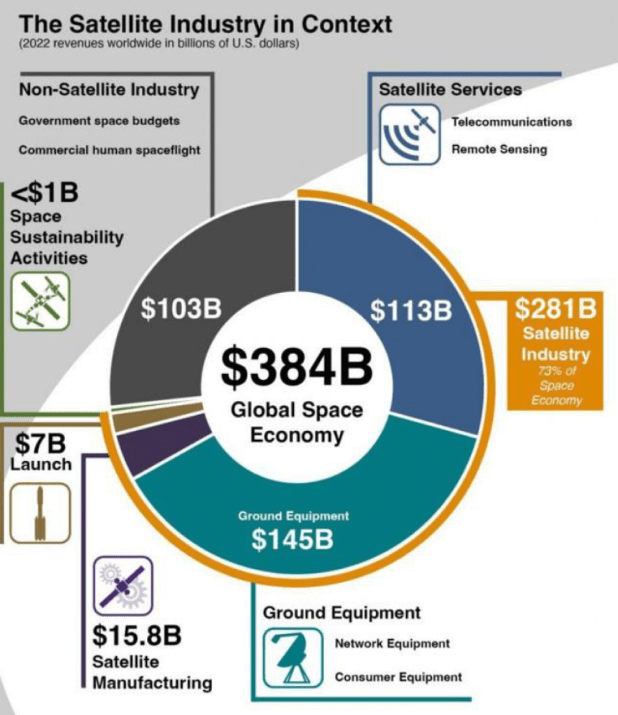
Global Space Economy (2022 revenues worldwide in billions of U.S dollars)
Source: SIA- State of the Satellite Industry Report
Satellites play a crucial role in our everyday lives, contributing significantly to the space economy, with 73% of industry revenue derived from the satellite segment.11
The applications of satellites can be categorized into two different groups: space-for-earth applications and space-for-space applications. Certain space-for-earth applications involve delivering internet services to far-off places, ensuring connectivity in rural areas. Satellites also aid in gathering weather data, helping farmers detect regions needing replanting early in the season. Additionally, utilities leverage satellite information to monitor vegetation that could disrupt vital infrastructure, such as power lines, which assists companies in preventing power outages.3
Space-for-space applications encompass research and development. For instance, consumer goods companies may seek to innovate by developing products in space, capitalizing on the near vacuum-like conditions and zero gravity that can enhance design and manufacturing processes. Additionally, the manufacturing, construction, and assembly of robust launch vehicles could lead companies to establish factories or manufacturing plants in orbit. Semiconductor companies are exploring creating chips in space, leveraging the natural vacuum to enable innovative thin-layering techniques. One of the most exciting applications in this category involves exploration and habitation in space as Jeff Bezos of Blue Origin is already contemplating the prospect that large numbers of people could live and work in space.3
Space Tourism
In the non-satellite sector, Space Tourism currently represents less than 1% of the industry (Figure 5) but holds significant growth potential. For example, SpaceX and Blue Origin have been introducing self-landing rockets. With advancements in satellite technology leading to smaller and more efficient designs, companies are now launching “clusters of satellites using a single rocket”.5 3D printing technology also contributes to lighter and more adaptable designs.6
Space exploration's landscape has shifted from solely a government endeavor to a thriving business. Companies like SpaceX, Blue Origin, and Virgin Galactic are at the forefront, turning space exploration into a profitable venture. Virgin Galactic, for instance, offers suborbital space travel for $450,000 per trip, with a waiting list of 900 people. An ongoing effort is to reduce these prices, aiming to make space travel more commercially viable.13
Furthermore, governments and private companies are now seeing their sights on the Moon and Mars. NASA's Artemis program aims to return humans to the Moon, while companies like SpaceX aim to colonize Mars (Footnote 12). These ventures necessitate substantial investments in technology, spacecraft, and living habitats, presenting unique opportunities for investors. NASA also has opened the International Space Station for visitors since 2019, allowing space travelers to spend extended time in space, moving beyond brief suborbital experiences.9
Conclusion
Commercial space innovation is no longer an exploration of the unknown; it represents a business frontier teeming with opportunities for everyday investors. Whether in satellite technology, space tourism, or related sectors, there's a niche for everyone to participate in the space race. As the industry experiences unprecedented growth, those who invest in the commercial space sector may find themselves part of a thrilling journey that surpasses their wildest dreams.
Sources:
- Airbus. (2022). Airbus Company 10-K. SEC.
- Boeing. (2022). Boeing company 10-K. SEC.
- Brukardt, R. (2023). How will the space economy change the world? McKinsey & Co.
- Grush, L., Kendall, T., & Bloomberg. (2023, July 24). The commercial space industry, led by Elon Musk’s SpaceX, is expected to blast off with 41% growth over the next 5 years.
- Howell, E. (2022, February 10). The history of rockets.
- Listek, V. (2021, March 22). 3D Printing and the Future of Space.
- McKinsey & Company. (2021). R&D for space: Who is actually funding it?
- McKinsey & Company. (2024). A giant leap for the space industry.
- NASA. (2019, June 07). NASA Opens International Space Station to New Commercial Opportunities, Private Astronauts.
- Satellites Industry Association. (2023). 26th Annual State of the Satellite Industry Report.
- Space Capital. (2023). Space Capital Quarterly Report.
- Space X. (2024). Human Space Flight.
- Virgin Galactic. (2022). Virgin Galactic's Company 10-K.
See what private funds are investing in space-related businesses and how your clients can participate.
For financial advisors only.