
Published on April 4, 2025
Stargate, DeepSeek, Grok: Who’s Now Winning the AI Arms Race?
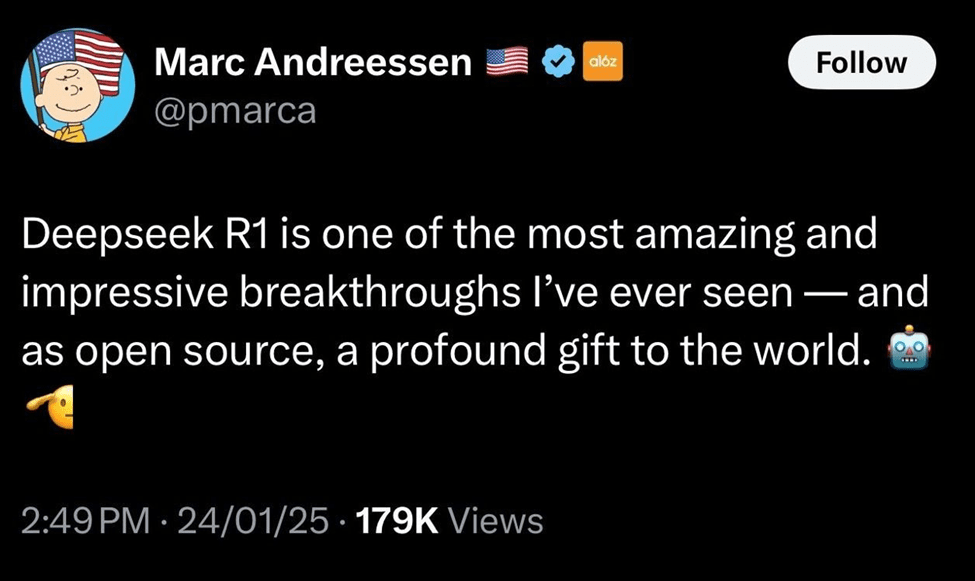
Markets were absolutely rocked on Monday, January 27th, on the heels of an announcement from a little-known Chinese large language model (LLM) start-up, DeepSeek. One of the tech world’s most influential investors, Marc Andreessen, summed up his thoughts on X:
The chip giant Nvidia, which lies at the heart of powering artificial intelligence (AI), lost roughly $600 billion in market value, sparking a flurry of AI-related sell-offs. The question everyone was asking:
How could an open-source unknown LLM score on par, if not better, to the world’s leading LLMs over multiple benchmarks?
Open Source and China Have Caught Up With OpenAI
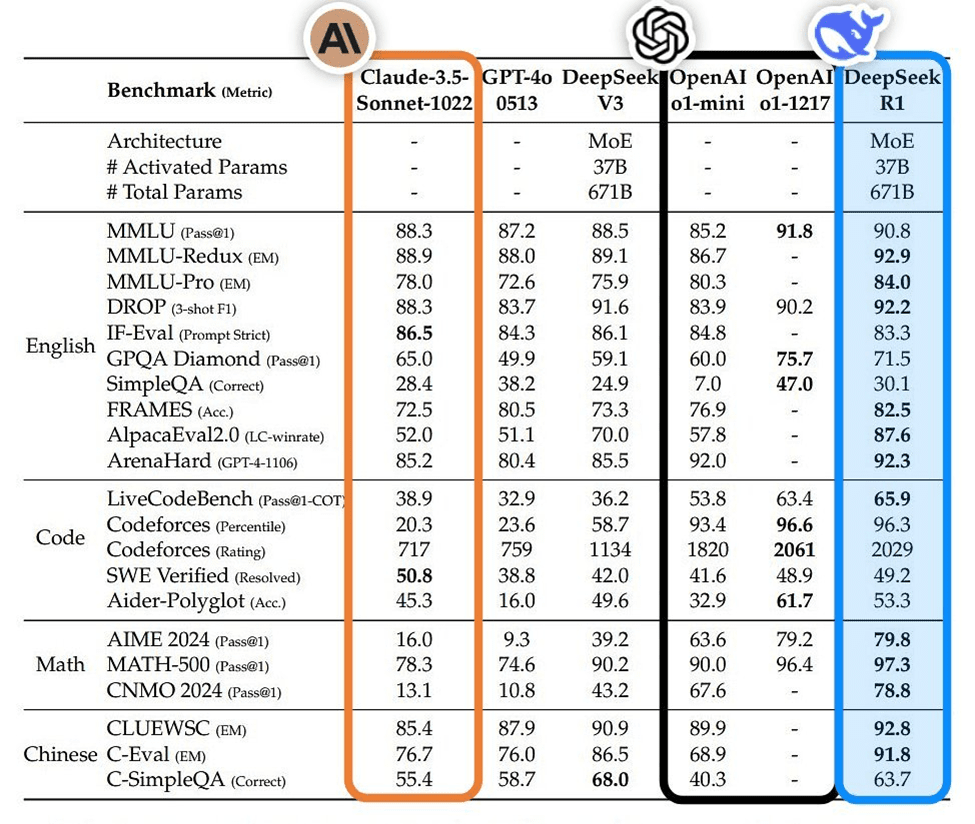
Source: Wang, Brian. January 21, 2025. “Open Source and China Have Caught Up With OpenAI.” Next Big Future.
DeepSeek - The Newest AI Arms Race Competitor
For most people, DeepSeek is yet another powerful LLM that can now be added to the group of OpenAI´s Chat GPT and Anthropic’s Claude. But DeepSeek is groundbreaking for two reasons:
- The cost to use
- The cost to develop
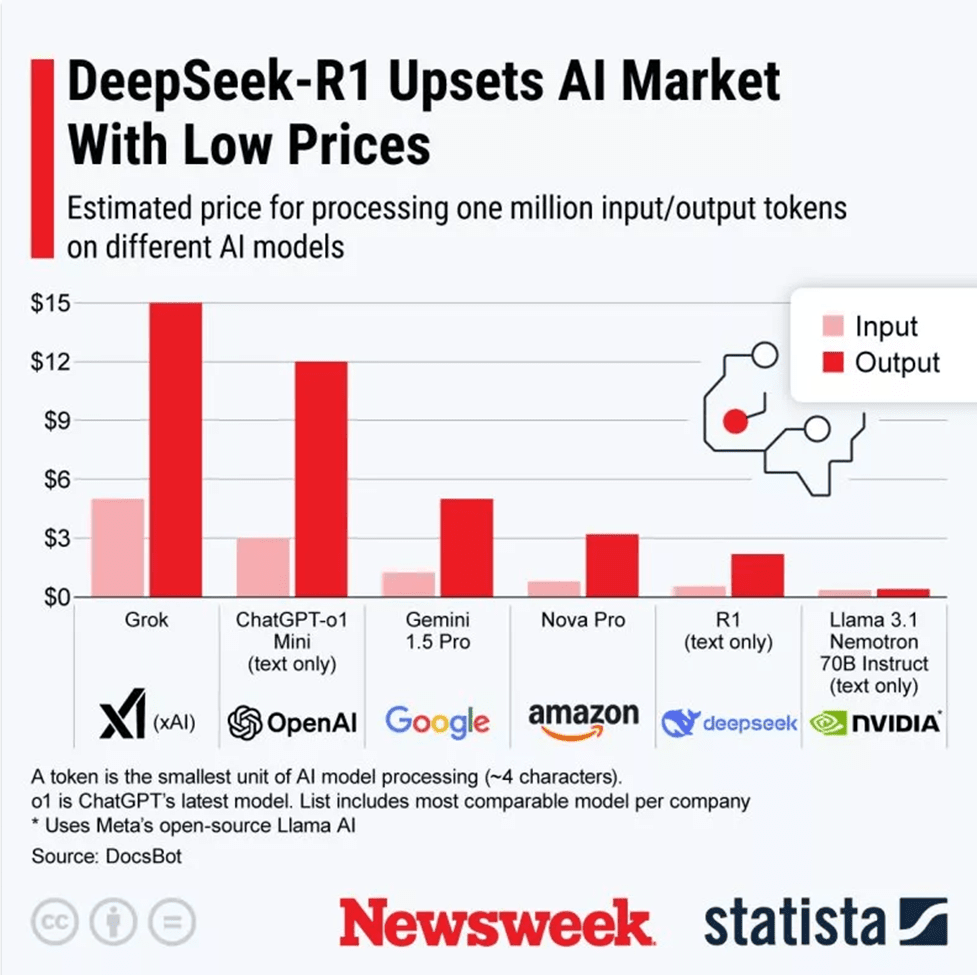
Unlimited access to OpenAI’s 01 requires a pro account - $200/month. DeepSeek’s base version, however, is free, and more superior versions are available at a fraction of the cost. Companies or individuals that don’t require overly complex tasks are allowed unfettered access to DeepSeek’s application programming interface (API). This grants permission to apps to “talk” to each other, providing programmers ample space to personalize their own apps.1
A paid version of DeepSeek is available, but the user pays according to the amount of data processed, something that is completely upending the business model of companies like OpenAI charging monthly fees for AI services.
While lowered barriers of entry are nice, it was the publicized development cost of DeepSeek that caused Nvidia to fall 17% in a day. The figure remains hotly debated, but DeepSeek claims it spent just $5.6 million on its base model.2 Compare this with the billions US companies are currently spending on AI technologies, and it’s understandable why the AI arms race has been completely upended.
The Reaction
Just days before the DeepSeek bombshell release, President Donald Trump announced a project known as Stargate. A private sector investment between OpenAI, Oracle, and Soft Bank, Stargate will fund the construction of AI data centers across the US to the tune of $500 billion.3
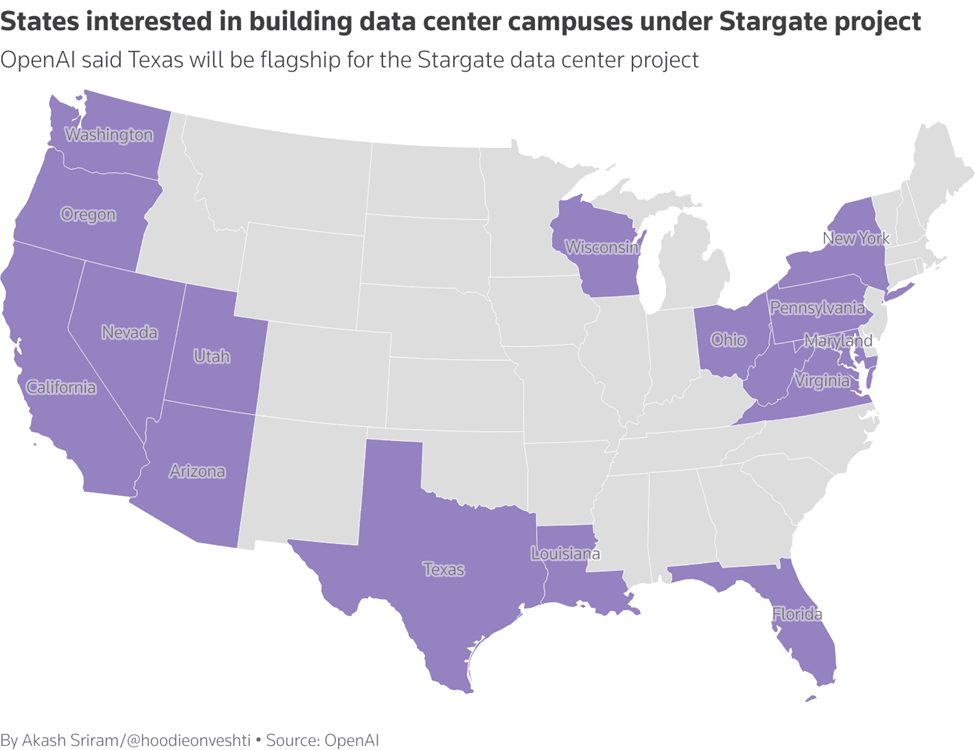
With the AI arms race heating up, Stargate is slated to begin construction in Texas with a 1 million-square-foot facility.4 The announcement was a proclamation to the world, but China specifically, that the US will take the offensive posture to dominate the larger AI landscape moving forward. DeepSeek, however, has now moved Stargate and US AI players into a defensive posture, which are unchartered waters in the tech world.
There’s a multitude of directions President Trump could now take, but two stand out:
- Continue to try and thwart Chinese access to cutting-edge chips (more on that to come) and plow ahead at an accelerated pace with Stargate.
- Praise DeepSeek’s advances and lean into an “open, collaborative” environment with all actors - Europe, the US, and China.
Why this Matters?
The most interesting question in the AI arms race is why does it matter? OpenAI’s charismatic CEO Sam Altman has written and spoken extensively about this issue. In “AI in America: OpenAI’s Economic Blueprint,”5 Altman argues the world runs the risk of Chinese Communist Party dominance over AI if the US does not assert itself more aggressively. In “Infrastructure is Destiny,”6 Altman sounds a similar refrain, remarking:
“The question is not whether that funding will flow, but where. If it doesn’t flow to US-backed global infrastructure projects that advance a global AI that spreads the technology’s benefit to the most people possible, then it will flow to China-backed projects that leverage AI to cement and expand autocratic power. There is no third option.”
A major issue for both countries moving forward will be the energy needed to power AI data centers.
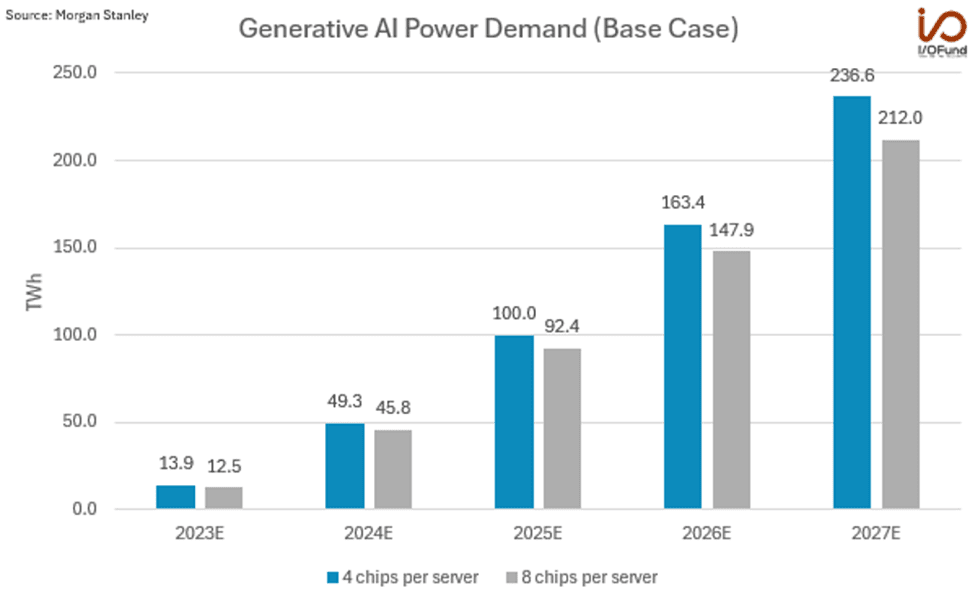
While DeepSeek was a surprise, it is known that China lacks the financial depth to build and maintain an AI ecosystem that could compete with the US. The $500 billion Stargate commitment over four years dwarves what China has spent - $186 billion - on AI infrastructure in this millennium.7
However, Altman appears intent on making sure that the estimated $175 billion in global funds awaiting AI investment projects flows to Stargate and ancillary “US friendly” companies instead of China.8 Like the Manhattan Project in many ways, Stargate wants to win the AI arms race and suck up all the funding, which would simultaneously starve Chinese efforts.
Keep an Eye on Grok
While Elon Musk was quietly toiling away at DOGE, his AI company, xAI, dropped Grok 3 on February 18th. Early tests suggest the LLM outperforms OpenAI and DeepSeek on math, science, and coding standardized tests,9 but there remains a contentious back-and-forth with engineers posting over X performance charts that lean back towards OpenAI.10
Whatever the case, Grok 3 is yet another LLM to add to the AI arms race. Musk is a bit of an outlier in terms of resources, as his “colossus supercomputer” that was used to train LLMs last year utilized a mind-boggling 100,000 advanced Nvidia GPUs. Few companies can leverage that amount of computing, and Grok 3 was rumored to have been trained on 200,000 GPUs.
While Musk and Altman have been publicly feuding, if Grok 3 eventually prevails, it too is US born and bred.
The Regulatory Elephant
The AI arms race wouldn’t be complete without addressing the regulatory elephant in the room. Vice President JD Vance’s speech at the Artificial Intelligence Action Summit in Paris in early February was a shot across the bow to European leaders who have tended to favor tighter AI regulations.11
The European Union has done layman’s work in reigning in corruption, but compared to the US, the overall regulatory environment is stifling. The worry is an ever-growing regulatory morass would hinder the advancement and uptake of AI models and chatbots across the continent.
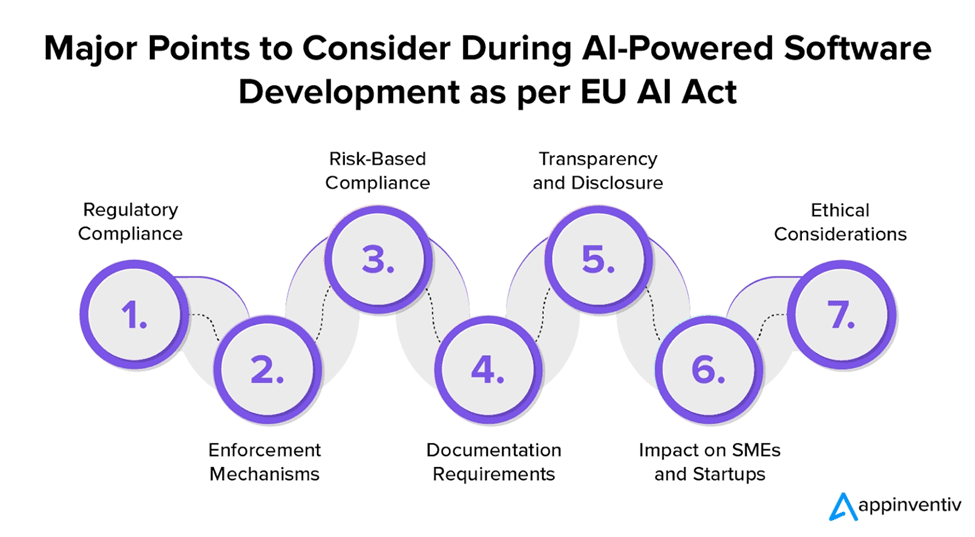
Another worry is that an overly burdensome regulatory environment discourages start-ups. A US/European partnership with coherently structured regulations could leverage a combined population of 1 billion +, something China would not be able to compete with.
Much of Europe’s fascination with a strong regulatory AI framework can be gleaned from public sentiment. In general, the public’s views of AI in developed countries is 60% to 70% negative. Worries about job replacement, or worse, sentient bots, are commonplace. In developing countries, however, public sentiment on AI is literally flipped - 60% to 80% positive.12
All of this poses a challenge for the US when it comes to China. With a massive populace that likely supports AI development and a top-down regime that can impose its will without the need for public support, China is simply waiting for gaps or cracks to exploit.
Conclusion
The US did its best to hinder Chinese AI development. In 2022, the Biden administration put in place controls on the chips exported to China. There was some initial confusion with Nvidia, the leader in AI chips, and estimates point to high-powered Nvidia chips having made their way to China for at least a year before the company in 2023 began designing a less-powerful chip specifically for the Chinese market.13
Yet, it feels almost antiquated in 2025 to think access to the hardware to build LLMs like that of DeepSeek would not somehow find its way into China. What DeepSeek demonstrates is Chinese technological prowess has caught up, and if the US wants to distance itself once again, it will need massive investment from partner nations. Japan and SoftBank have come on board and while Europe is rightly worried about Ukraine and Russia, winning the AI arms race is now also on the menu.
Sources:
- Estes, Adam Clark. January 29, 2025. “DeepSeek is bad for Silicon Valley. But it might be great for you.” Vox.
- Goldman, David, and Egan, Matt. January 27, 2025. “A shocking Chinese AI advancement called DeepSeek is sending US stocks plunging.” CNN.
- Holland, Steve. January 22, 2025. “Trump announces private-sector $500 billion investment in AI infrastructure.” Reuters.
- Field, Hayden. February 6, 2025. “OpenAI considering 16 states for data center campuses as part of Trump’s Stargate project.” CNBC.
- OpenAI. “AI in America: OpenAI’s Economic Blueprint.”
- OpenAI. September 2024. “Infrastructure is Destiny.”
- Smith, Craig S. January 24, 2025. “Stargate: America’s $500 Billion Bid To Corner Global AI Capital.” Forbes.
- Ibid.
- Butts, Dylan. February 18, 2025. “Musk’s xAI releases artificial intelligence model Grok 3, claims better performance than rivals in early testing.” CNBC.
- Mauran, Cecily. February 19, 2025. “How Grok 3 compares to ChatGPT, DeepSeek and other AI rivals.” Mashable.
- Sullivan, Mark. February 13, 2025. “What to make of JD Vance’s speech at the Paris AI summit.” Fast Company.
- Ipsos. July 2023. “Global Views on A.I. 2023.”
- Woo, Stu. January 28, 2025. “How China’s DeepSeek Outsmarted America.” The Wall Street Journal.
View the institutional private fund exposures on our platform investing in AI space and learn how you can build customized portfolios for your clients.
For financial advisors only.