
Published on October 8, 2024
Touchdown or Fumble? Private Equity Investments in the NFL
The Deal That Brought Private Equity in the NFL
After several years of consideration, National Football League (NFL) team owners voted to allow private equity in the NFL—permitting teams access to hundreds of millions of dollars. Private equity firms will now be able to acquire up to 10% of a team with a minimum stake of at least 3%, act as silent partners, and have a limited say in team decisions.
Only a handful of private equity firms have been shortlisted into this elite club, giving them the potentially lucrative ability to hold stakes in more than one team. Institutional investors were previously prohibited from investing in the NFL, and this marks a major shift from years of generational families and wealthy individual ownership.
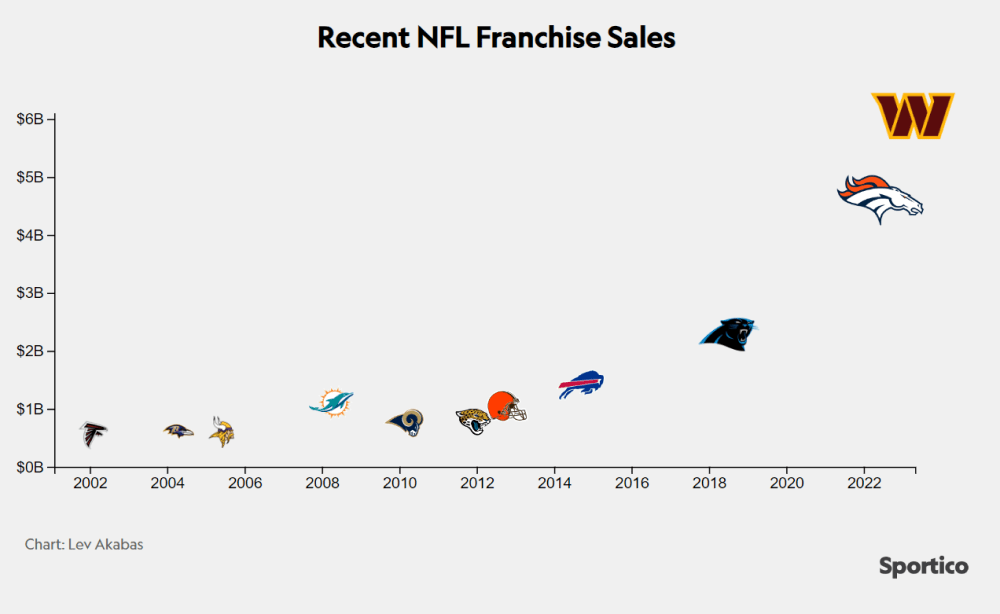
But why would owners want private equity in the NFL now? Franchise prices for teams have grown exponentially, as evidenced by the recent sale of the Washington Commanders for a record-breaking $6.05 billion.1 With these exploding valuations, the costs of running franchises have caused liquidity issues, and letting private equity in the NFL makes financial sense.
Reasons Private Equity Wants to Play Ball
With returns that are growing faster than most equities in recent decades, it's no wonder why private equity wants to play ball with the NFL. The average valuation of the NFL’s 32 teams in 2024 was $6.5 billion.2
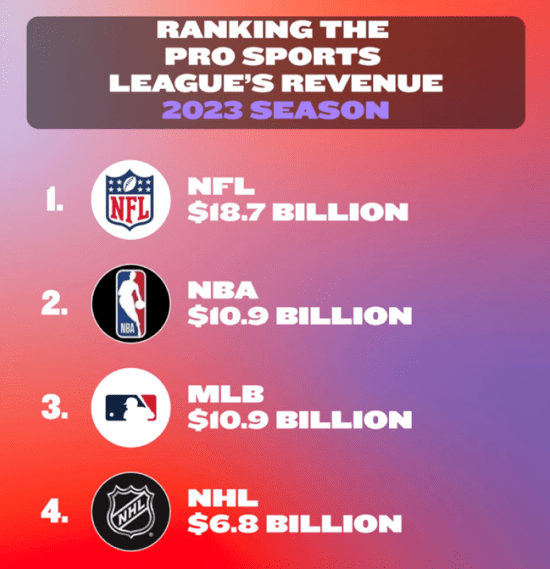
While other sports leagues are profitable, they don’t come close to football, which is the world’s largest sports league in terms of revenue. The 32 teams of the NFL generated approximately $20.5 billion in 2023, 72% higher than Major League Baseball and the estimated $12 billion of the National Basketball Association.3
From good to bad teams, all NFL teams are profitable. In 1999, the franchise of the Houston Texans was purchased for $600 million. Today, the Texans—with a record of 152-202-01 over 22 seasons—are worth over $6 billion.2
Where is all that money coming from? Largely from media and streaming deals, which accounted for over $12 billion annually, and an additional $1 billion from merchandising, sponsorship, and licensing deals. Both media and merchandising are negotiated for the league as a whole, and the money is then divided evenly among the 32 teams, regardless of individual performance.3
The NFL’s Most Profitable Teams
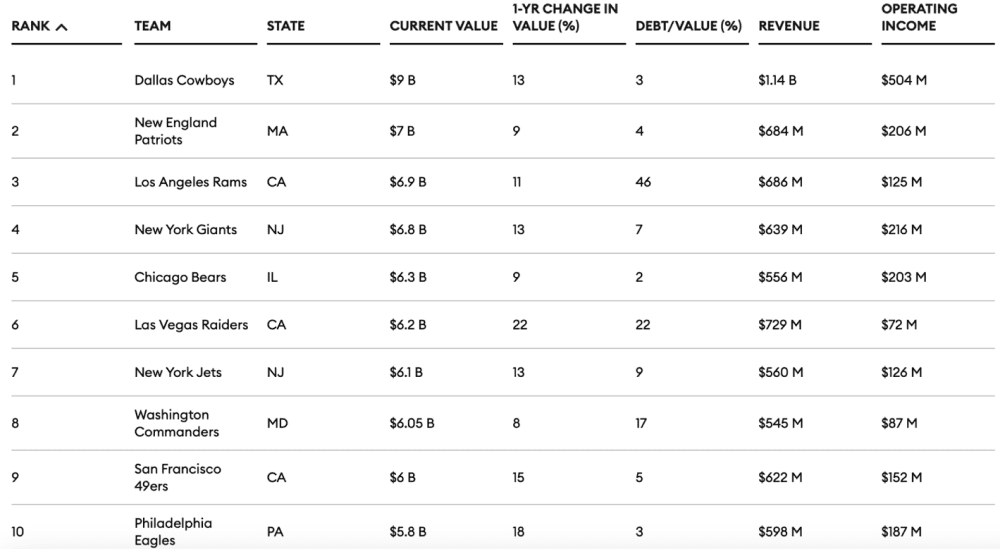
Source: Teitelbaum, J. (2024, August 30). The NFL’s most valuable teams 2024. Forbes.
The Other Major Sports Leagues Receiving Private Equity
With the deal, the NFL becomes the last sports league to make a deal with private equity. The tradition of investing in sports began in Europe when three American funds bought a majority share of European soccer team Paris Saint-Germain.4
Since then, leagues such as the National Basketball Association (NBA) and the Major League Baseball Association (MLB) have already received private equity investments. The first franchise to be open to investors in the United States opened in 2019, and since then, the scoreboard has kept lighting up.
Between the NBA, MLB, Major League Soccer, and National Hockey League, there are 63 North American sports teams with private equity ties, totaling an estimated $205.9 billion. And private equity in the NFL will push those numbers even higher.5
Looking at Private Equity in the NFL
So, who are the hand-picked private equity managers allowed to invest in the NFL? NFL owners specifically chose these private equity firms because of their sports-minded investment focus, while the consortium was founded by investor and former NFL running back Curtis Martin.6
- Arctos: Arctos manages about $7 billion, and their strategy is focused on pro teams and related sports
- Ares Management: Ares manages around $378 billion in assets, across several strategies
- Sixth Street: Managing $75 billion in assets
- Carlyle Group: $435 billion across global private equity, global credit, and investment solutions
- CVC Capital Partners: A Luxembourg-based fund with over $214 billion under management
- A consortium group including Blackstone and Dynasty Equity.
These firms abide by certain rules, including forced sale of an equity stake in the event the firm violates league terms, like conduct clauses.
The deal will provide existing owners with added liquidity, which could be used for stadium upgrades, player contracts, or other investments. A bigger pool of investors is needed to maintain valuations like those seen for the Washington Commanders. Given the terms of the deal, private equity will have a limited say in the team’s operations, making it an ideal teammate.
According to NFL Commissioner Roger Goodall,7
“Other leagues have been doing it; we're doing it with a cap at 10 percent. So [it's a] much less significant position (than other leagues). I think it's an appropriate thing to give teams that liquidity to reinvest in the game, into their teams. I think it's a positive development for us. I don't think all teams will take advantage of that, but they will if needed. It's a very good opportunity for them.”
The entry of private equity in the NFL will likely reshape the league's financial landscape. While it provides much-needed liquidity, the long-term effects depend on how teams and investors navigate this new structure.
Private equity managers are already investing in other leagues, and including the NFL will only increase their potential investment opportunities. These managers can provide helpful capital, unlock new revenue opportunities and professionalize organizations. Crystal Capital’s platform offers advisors and investors access to private market strategies tapping into this broader opportunity set.
Sources:
- Keim, J. (n.d.). NFL owners approve $6.05B sale of commanders to Harris Group. ESPN.
- Ozanian, M. (2024, Sep.5). Rising NFL valuations mean massive returns for owners. here’s how good the investment is. CNBC.
- Badenhausen, K. (2024, August 29). How NFL Team Owners Make Money. Sportico.
- Coffey, B. (2024, May 15). Sports grow from private equity afterthought to booming market. Sportico.com.
- Pitchbook. (n.d.). Major League Investors: Private equity’s Pro Sports Ties.
- Reuters. (2024, Aug. 28) NFL Allows Private Equity
- Battista, J. (2024, Aug. 28). NFL owners vote to allow private equity funds to buy stakes in teams. NFL.com.
See the private equity funds listed on our platform.
For financial advisors only.