
Published on May 28, 2025
President Trump's First 100 Days
President Trump’s first 100 days are in the books. The President has arguably notched the most vigorous start to any presidency, and all the more remarkable for a 78-year-old. A lot has taken place since January 20, 2025 - some good, some bad, and some perplexing.
President Trump has laid a framework that positions the second half of 2025 as the most critical piece of his presidency. If the policies work, he will not get crushed in the 2026 midterms. If they fail, his legacy is stained. This is a second act not to be missed.
Chaotic Order Guiding Trump’s First 100 Days
The President’s first term was unexpected. While many in his cabinet asserted they were confident he would win, there was a sense of surprise and awe upon entering the White House. Trump 2.0 was expected, and the President’s team spent the last four years planning exactly what they would do come January 20.
The OODA (Observe, Orient, Decide, and Act) Loop was first introduced by fighter pilot and military theoretician Colonel John R. Boyd.

The loop describes the mental cycles of a dogfighting pilot as they pursue their prey. The faster one cycles through the loop, the more successful they are, with the ultimate objective of leaving prey disoriented and confused.
The President and his team understood that speed was critical over these first 100 days. They cycled through the OODA Loop at a velocity that the media and the opposition had trouble keeping pace with.
Take the tariffs, for example. The President enacted sweeping tariffs, observed the effects, oriented himself with the help of Treasury Secretary Scott Bessent, and decided to place a 90-day pause. The media barely had enough time to cover the initial tariff levels before the market responded to the 90-day pause, and an entirely new narrative had emerged.
The constant barrage of executive orders, agency directives, social media posts, and public statements was swift, but the opposition is catching up.
Trump’s First 100 Days - What’s Worked
1. The Border
The President’s signature achievement 100 days in is a controlled southern border.
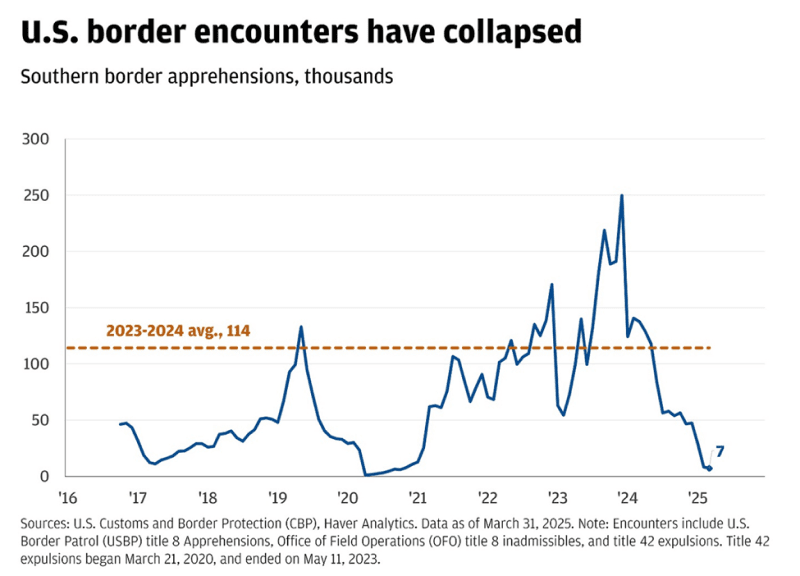
President Trump ran on curbing illegal immigration, and the problem appears already resolved. This issue polled well across both parties,1 and despite the snafus with illegal immigrant deportations, a controlled southern border is a win.
2. Liberating Crypto
Trump’s first 100 days have been a boon to the cryptocurrency sector. So far this year, crypto firms have cemented 88 deals for a total transaction value of $8.2 billion.2
- The biggest US crypto exchange, Coinbase Global, reached an agreement to acquire Deribit for $2.9 billion3 and will join the S&P 500.
- Twenty One Capital, a new bitcoin company backed by SoftBank Group and Tether, plans to go public via a $3.6 billion merger with a company led by Brandon Lutnick.4
- Ripple is betting on future institutional investor exposure to crypto by acquiring Hidden Road for $1.25 billion.5
- Crypto and traditional assets trading platforms meet with Kraken’s $1.5 billion deal for futures broker NinjaTrader.6

The President has put in place crypto-friendly regulators, and Congress is progressing on bills to establish a regulatory framework for digital assets.7 The Security and Exchange Commission Chairman Paul Atkins remarked that his priority is to “develop a rational regulatory framework for crypto that establishes clear rules of the road,” and Bitcoin is nearing its all-time high once again.8
3. DOGE
While controversial, the Department of Government Efficiency (DOGE) has uncovered some questionable federal spending. No president, at least not yet, has the political fortitude to touch entitlement spending, the principal driver of ever-growing US debt. While DOGE is far from reaching its goal of $1 trillion in cuts, and despite the bumps and missteps along the way, it might very well be remembered as the most successful government efficiency program to date.9
Trump’s First 100 Days - What Hasn’t Worked
1. Tariffs
The most obvious place to start is tariffs. As we’ve written here before, tariffs are taxes. In the best of cases, the President would wield tariffs as negotiating chips but avoid implementing them. In the semi-worst of cases, the tariffs would be implemented, all parties would feel the effects, and negotiations to bring them down would follow. In the absolute worst of cases, tariffs remain in place for extended periods of time.
“Liberation Day,” April 2, absolutely tanked the market.
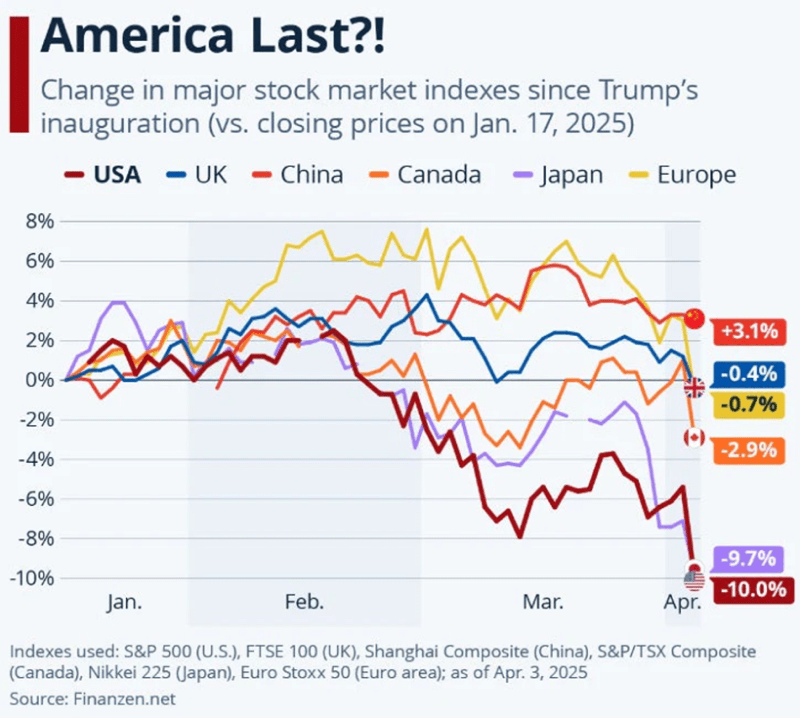
The S&P 500 plummeted more than 10% over the subsequent three days, and at its lows, the index was down 19% from February record highs. Investor anxiety was through the roof, as retirees watched their relatively secure portfolios get hammered. The President quickly shifted, announced the 90-day pause, and the rollercoaster shifted in the opposite direction.10
The market has recovered with the S&P 500 and Nasdaq 100 now positive for the year. A constructive trade deal with the United Kingdom and advanced conversations with China on lowering tariffs have also bolstered investor confidence. But it would behoove the President to take into consideration the long-term effects of elevated tariffs. His base support is seeking economic security.
2. Sliding M&As
When the pro-business President was elected, bankers expected a banner 2025 for mergers and acquisitions (M&A). Yet, President Trump’s first 100 days has thrown the world economy into disarray with on-again/off-again tariffs leaving investors on the sidelines.
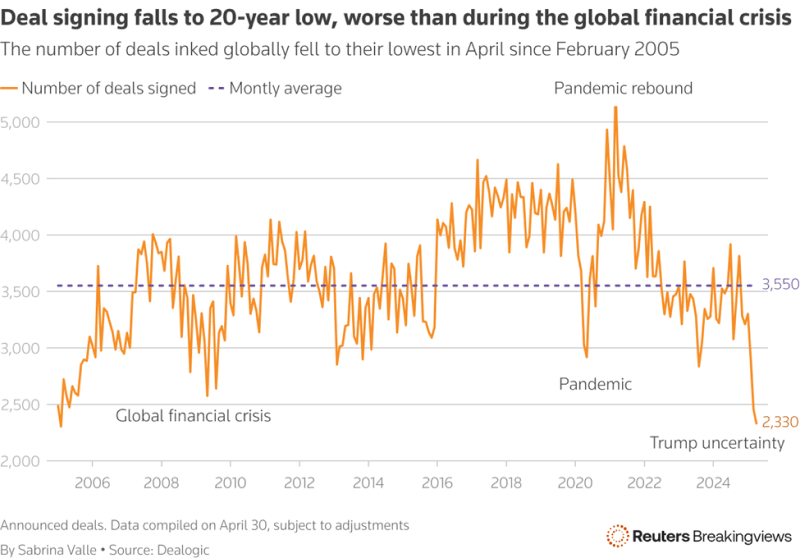
The lone M&A bright spot has been tech deals, accounting for nearly 40% of all US deals so far in 2025. The global head of M&A at Citi, Kevin Cox, notes that telecom, media, services, oil and gas, and utilities sectors are less affected by tariffs, but anyone who is a manufacturer and receives inputs from abroad or sends a finished product outside the US is affected.11
3. Fed Fights
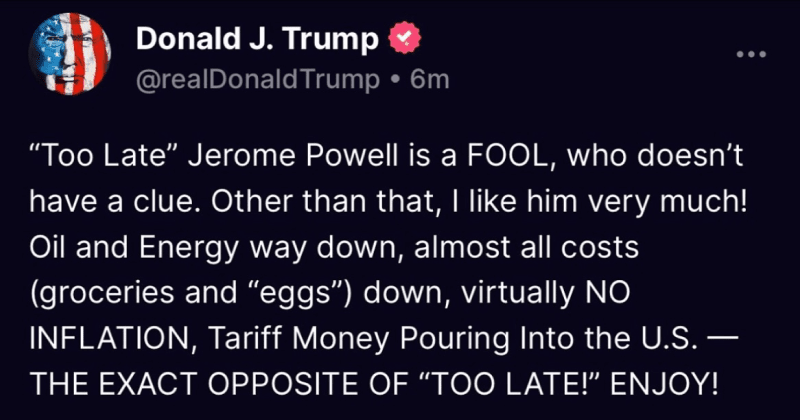
Finally, fighting with the Federal Reserve Chairman Jerome Powell is a losing proposition. History shows us that when central banks are pressured by presidents, inflation typically follows. The President wants lower rates to juice the economy, but the Federal Reserve is keeping benchmark rates steady.
In response, the President took to Truth Social:12
What Does the President Want?
It’s a tough question to answer. But according to the President’s Treasury secretary, Scott Bessent, the President wants to:13
- Renegotiate Global Trade
- Adopt Sensible Tax Policies
- Deregulate the Economy
While the President is renegotiating global trade, we can expect more market uncertainty.
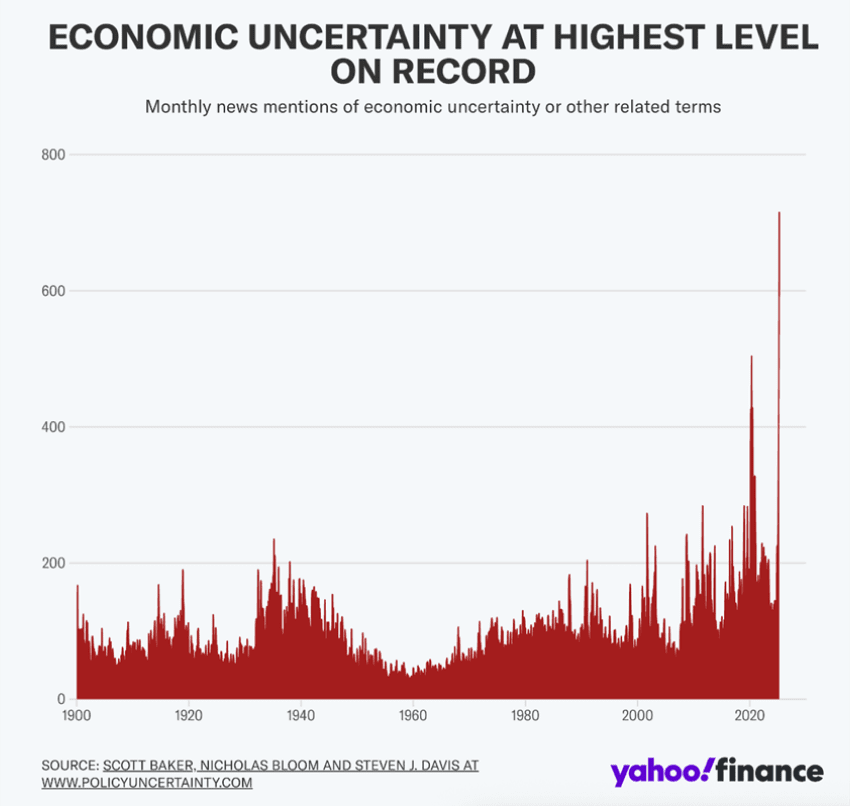
Chinese trade talks continue to progress, and like the U.K. agreement, if the President can continue cementing deals that lock in tariff rates, certainty around what things will cost to manufacture, ship, and import/export will drive investment.
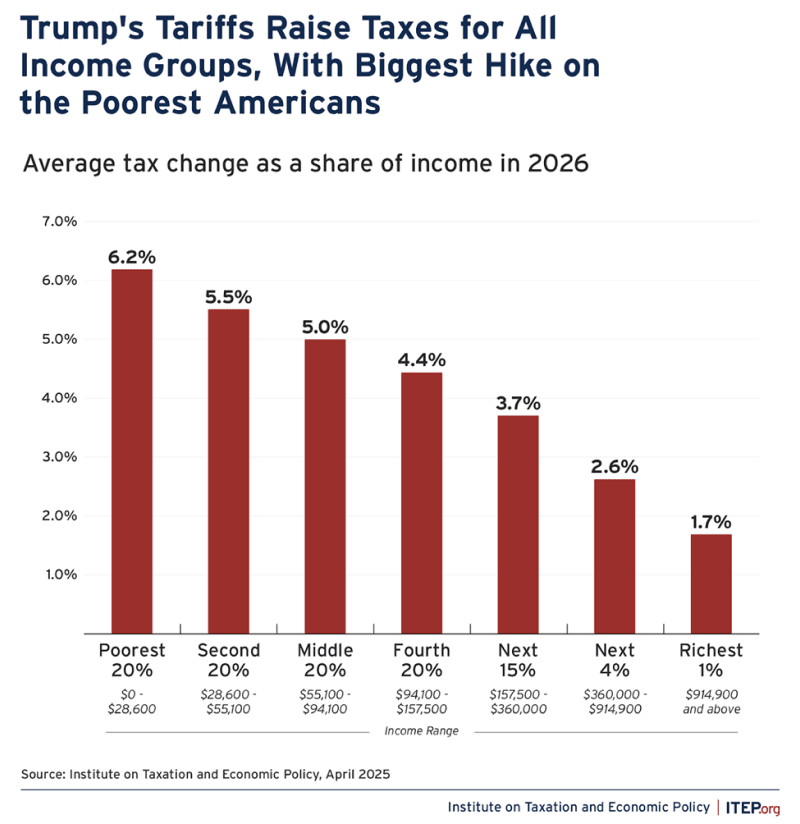
In regards to taxes, everyone loves a tax cut, but some income groups will cheer them more than others.
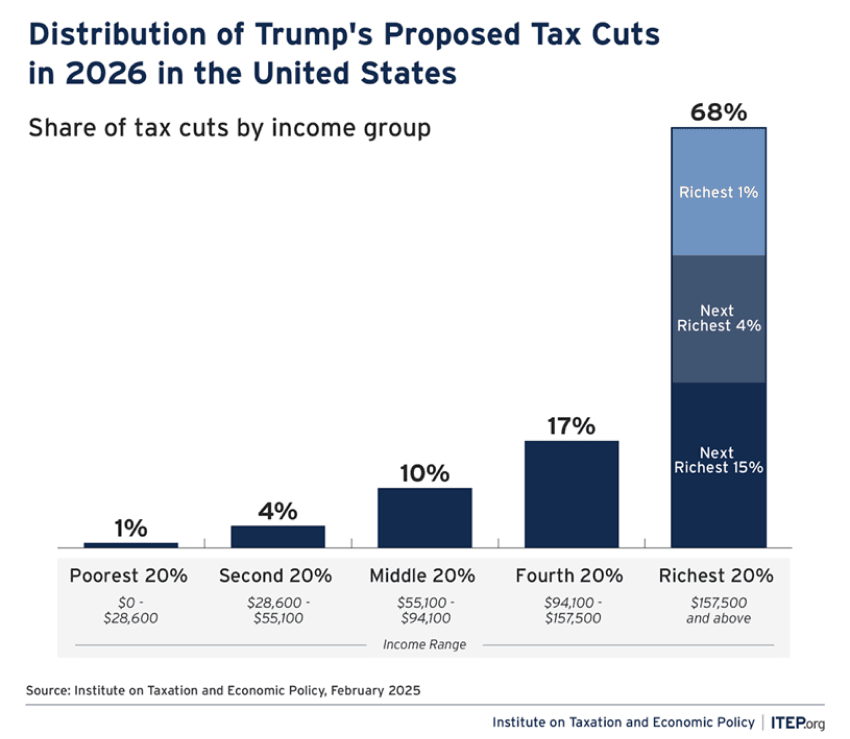
Coupled with no tax on tips, overtime, and Social Security, Bessent also cites the restoration of 100% expensing for equipment. This would be applied to new factory construction in a bid to accelerate reindustrialization.14
Finally, and perhaps the most interesting for alternative investment opportunities, is deregulation. Eliminating obstructive regulatory barriers to foster artificial intelligence (AI) data center construction is a critical piece of the President’s agenda.
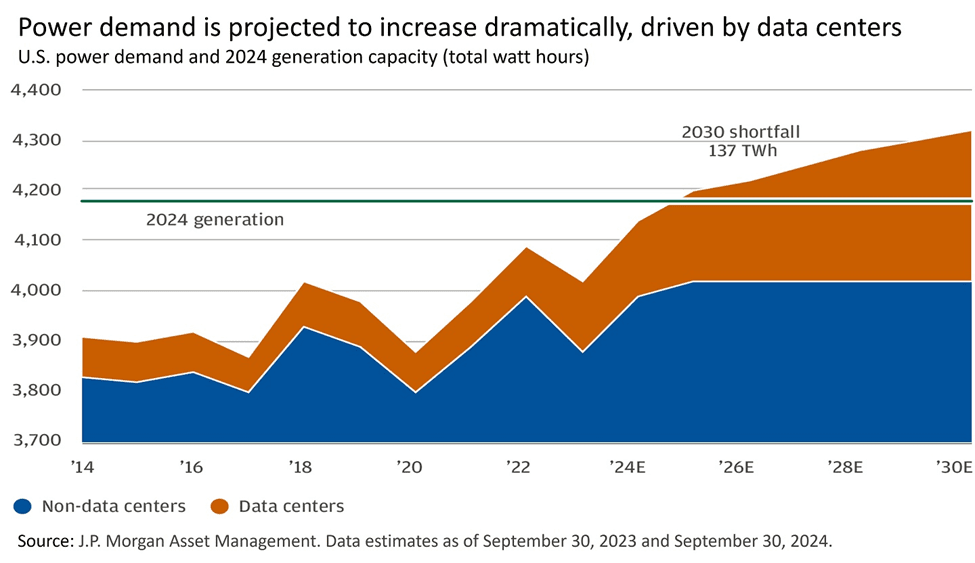
Investments in power generation and distribution projects, as well as anything that underpins AI and digital infrastructure, are fertile territory.
Conclusion
Former President Biden’s campaign pitch was a “return to normalcy.” President Trump’s informal campaign pitch in 2024 was also a “return to normalcy.” President Trump’s first 100 days have been anything but normal, but there is a normality that the President appears to be aiming for.
President Ronald Reagan inherited a similar set of challenges during his first term. While Reagan is historically remembered for ending the Cold War, the bulk of that work occurred in his second term. To end the Cold War, Reagan needed to first address domestic economic issues and get things back to normal. President Trump appears to be taking the same route, but with a flair that is distinctly his own.
Sources:
- Mukherjee, Sahana, and Krogstad, Jens Manuel. September 27, 2024. “Trump and Harris Supporters Differ on Mass Deportations but Favor Border Security, High-Skilled Immigration.” Pew Research Center.
- Osipovich, Alexander. April 26, 2025. “Trump 2.0 Era Brings Flurry of Crypto Deals.” The Wall Street Journal.
- Hollerith, David. May 8, 2025. “Coinbase to buy Deribit for $2.9 billion in landmark crypto deal.” Yahoo Finance.
- Idem.
- Osipovich, Alexander. April 26, 2025. “Trump 2.0 Era Brings Flurry of Crypto Deals.” The Wall Street Journal.
- Idem.
- Balhaus, Rebecca, Dawsey, Josh, and Collins, Eliza. March 7, 2025. “The Forces That Flipped Trump From Crypto Critic to ‘Crypto President’.” The Wall Street Journal.
- Yahoo Finance. March 16, 2025. “Bitcoin USD Price.”
- Musk, Elon, and Ramaswamy, Vivek. November 20, 2024. “Elon Musk and Vivek Ramaswamy: The DOGE Plan to Reform Government.” The Wall Street Journal.
- Schafer, Josh. May 3, 2025. “The stock market comes all the way back - and then some: Chart of the Week.” YahooFinance.
- Valle, Sabrina. May 6, 2025. “M&A deal signing hits 20 year-low after Trump’s ‘Liberation Day’.” Reuters.
- Truth Social. Donald J. Trump.
- Bessent, Scott. May 4, 2025. “Trump’s Three Steps to Economic Growth.” The Wall Street Journal.
- Idem.
Get a free trial of our proprietary alternative investment analytics and manager performance data.
For financial advisors only.