
Published on November 20, 2024
Unlocking Value Amid Turmoil: A Guide to Distressed Debt Strategies
In the world of high finance, few strategies are as daunting—or as potentially rewarding—as distressed debt investing. As businesses encounter downturns, defaults, or financial restructuring, opportunities arise for investors to acquire their debt at steep discounts. Distressed debt strategies aren’t for the faint-hearted, but for those who understand the nuances, these investments can generate substantial returns. Here’s an in-depth look at how distressed debt strategies work, the risks involved, and what makes this investment approach unique in today’s turbulent economic climate.
What is Distressed Debt?
Distressed debt refers to securities from companies in financial trouble—often on the verge of bankruptcy or actively restructuring. These securities, usually bonds or loans, are sold at a significant discount to their face value because the issuing company is perceived as high-risk. The objective for distressed debt investors is to buy low with the potential for high returns if the company recovers or restructures favorably. In some cases, investors may even gain a controlling interest in the restructured company.
Why Invest in Distressed Debt?
When companies face financial hardship, they may struggle to make debt payments, driving down the prices of their bonds or loans. This opens up a unique opportunity: a debt security with a face value of $1,000 might be available for a fraction of that amount. In fact, in recent years, investors have been able to purchase distressed bonds at discounts of 50-70% off their face value, according to research from the Federal Reserve Bank of St. Louis. If the company survives or restructures, investors could see substantial gains as the bond's value recovers. However, even in cases where the company goes bankrupt, distressed debt holders may receive partial repayment or an equity stake in the restructured company, which could also prove profitable.
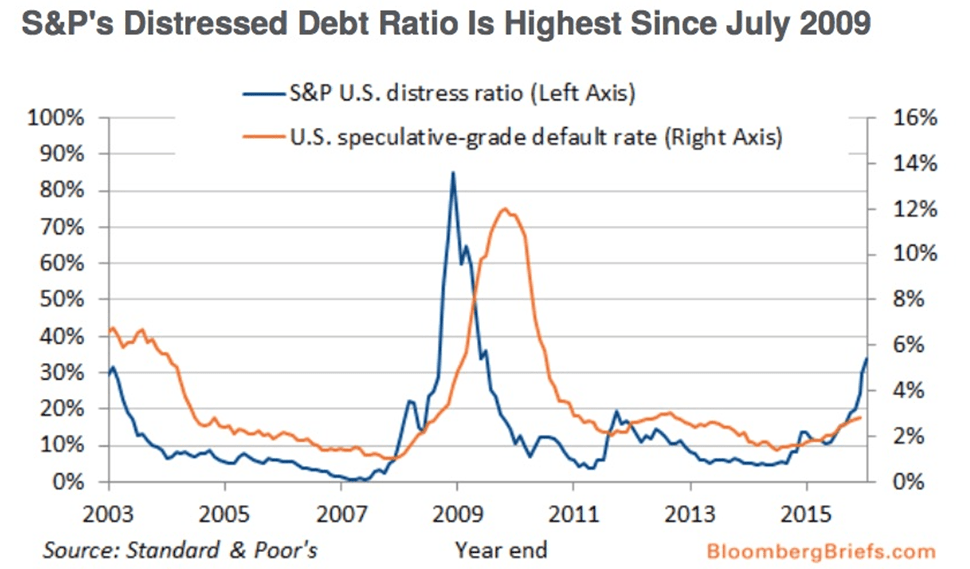
Investors are drawn to distressed debt for several reasons:
- High potential returns: Buying debt at deep discounts offers the potential for high returns if the company stabilizes.
- Influence in restructuring: Holders of distressed debt can often play an active role in the company’s restructuring.
- Diversification benefits: Distressed debt may behave differently than other assets, providing some diversification in a portfolio.
Key Strategies in Distressed Debt Investing
-
Passive vs. Active Distressed Investing
Investors can approach distressed debt as either passive or active participants. A passive investor buys the debt and waits for the company to recover or the market to revalue the debt, potentially generating returns without intervening. Active investors, on the other hand, aim to influence the restructuring process, often working with management or creditors to steer the company through bankruptcy or other transitions.
-
Distressed-to-Control Strategy
This strategy involves buying enough debt to gain significant influence over the restructuring process, sometimes even taking control of the company. By purchasing substantial amounts of debt at low prices, investors can convert debt to equity or negotiate favorable terms. This hands-on approach is riskier and requires deep expertise in financial restructuring, but it can be highly lucrative.
-
Backruptcy Play
Bankruptcy presents a unique opportunity for distressed investors. In bankruptcy, debt holders are among the first in line to be paid, often ahead of equity holders. Sophisticated investors analyze bankruptcy cases to determine if a company’s assets will yield sufficient value to repay creditors. In some instances, debt can be converted into new equity in the reorganized company, leading to significant upside if the company stabilizes.
-
Distressed-for-Control with Value Catalyst
This hybrid strategy seeks not only to acquire control but also to implement specific initiatives to enhance company value post-restructuring. These could include streamlining operations, asset sales, or strategic shifts. Investors in this strategy often have extensive industry knowledge and operational expertise to drive these changes.
Assessing Risk in Distressed Debt
Distressed debt is inherently high-risk, and investors should weigh several factors:
- Credit Risk: The primary risk is that the company will be unable to meet its obligations, leaving investors with little or no repayment.
- Liquidity Risk: Distressed securities are often less liquid than regular bonds or stocks, which can make it difficult to sell positions when needed.
- Legal and Operational Risks: Restructuring involves complex legal processes and can be prolonged. Bankruptcy proceedings can take years, requiring patience and resilience.
Investors must also consider that distressed debt is sensitive to broader economic trends, such as interest rates and market volatility. For instance, as of 2024, rising interest rates have amplified distress in several sectors, with over $500 billion in corporate debt trading below investment grade according to Moody’s Investors Service. However, in more stable economic periods, opportunities in distressed debt may diminish as fewer companies face severe financial distress.
Navigating the Distressed Debt Market Today
The current economic environment is fertile ground for distressed debt strategies. High inflation and rising interest rates have put pressure on a range of companies, particularly those heavily leveraged or in cyclical industries. As the number of distressed companies grows, so does the potential for investors to find attractively priced securities. However, the competition has also intensified, with many institutional players—hedge funds, private equity firms, and even traditional asset managers—targeting distressed opportunities.
Practical Considerations for Individual Investors
For individual investors interested in distressed debt, participating directly can be challenging. These investments require significant resources, industry knowledge, and legal expertise. However, retail investors can access distressed debt markets through mutual funds or exchange-traded funds (ETFs) that focus on high-yield or distressed securities. Some funds specialize in distressed assets, offering a diversified approach with professional management to mitigate some of the risks involved.
Final Thoughts: Is Distressed Debt Right for your Clients?
Distressed debt strategies are not for every investor. They require a tolerance for risk, a long investment horizon, and the ability to understand complex financial situations. But for those with the knowledge and resources, distressed debt can offer compelling returns and a unique way to capitalize on market volatility and economic cycles.
Sources:
- Economic synopses. FRASER. (n.d.).
- Langton, J. (2023, October 16). Corporate debt refinancing risk on the rise: Moody’s. Investment Executive.
- An introduction to distressed debt investing strategies. CAIS. (n.d.).
- A case for distressed hedge fund strategies and how to Enhance returns: Portfolio for the future. CAIA. (n.d.).
View the institutional funds on our platform that are positioning themselves to take advantage of distressed debt opportunities.
For financial advisors only.