
Published on February 3, 2025
US Equity Markets: A Fundamental Rally or Speculative Surge?
The US stock market’s performance in 2024 reflects a blend of robust corporate earnings and investor enthusiasm. The S&P 500 surged by 25% in 2024, mainly driven by technological sector gains and an overall optimistic economic outlook.1 However, concerns about overvaluation, fiscal deficits, and a shifting monetary policy landscape loom large. GDP growth has slowed to an annualized rate of 2.1% in Q4 2024, down from the previous quarter’s 3.1%, raising questions about the sustainability of market growth.2
Historically, rapid market gains fuelled by liquidity and speculation have been precursors to increased volatility.3 With the Federal Reserve signalling a more cautious stance on interest rates and persistent inflationary pressures, investors must carefully evaluate the market’s trajectory.
Why the Concern with US Equity Markets?
Recent market trends mirror previous speculative cycles, prompting concerns of a potential pullback. Several key market drivers highlight the evolving landscape:
- Fund Flow Dynamics: Money market funds (MMFs) have seen record inflows exceeding $6 trillion, with significant portions now shifting into equities.4
- Overvaluation Risks: The CAPE ratio stands at 32, well above historical averages, suggesting stretched valuations.5
- Federal Reserve Policy: The central bank has indicated fewer rate cuts than expected, with a terminal ate projected at 4%.6
- Fiscal Challenges: The US federal debt continues to rise, surpassing $34 trillion, with deficits projected to remain above 6% of GDP.7
Speculative Fund Flows
The recent rally has been partly driven by capital outflows from MMFs into risk assets. Investors, seeking higher returns amid declining bond yields, have channelled significant funds into equities, further inflating valuations.2
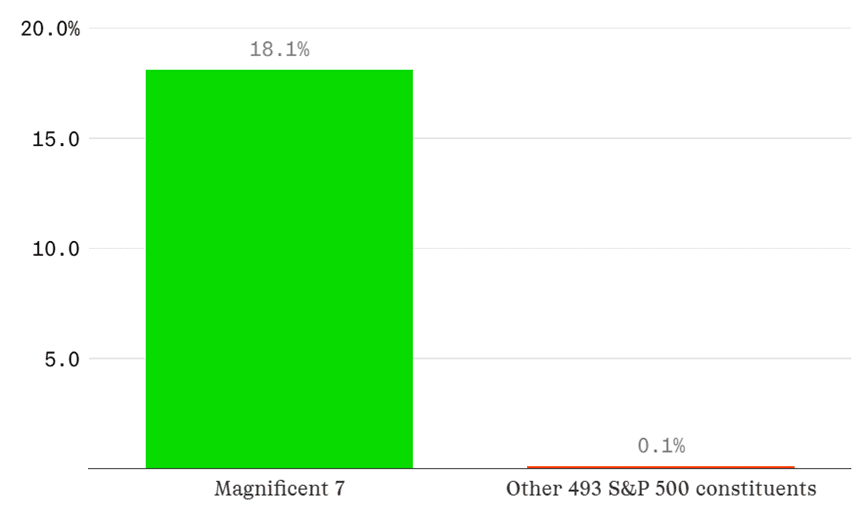
Despite strong corporate earnings, market internals suggest speculative buying behaviour, with the "Magnificent 7" stocks—Alphabet, Amazon, Apple, Meta, Microsoft, Nvidia, and Tesla—accounting for the bulk of market gains in 2024.8
Expected year-on-year earnings growth for Q3 2024 reporting period
Overvaluation Concerns
Stock market valuations have reached levels that suggest caution. Indicators such as the CAPE ratio, forward P/E multiples, and market capitalization relative to GDP signal potential overvaluation.9 Historically, high valuation levels have been followed by lower long-term returns and increased market volatility.
Debt levels also contribute to risks. The US debt-to-GDP ratio is projected to exceed 107% by 2029, with borrowing costs rising due to higher interest rates.10
Fiscal and Monetary Policy Landscape
Fiscal and monetary policies remain critical market drivers. Recent actions include:
- Federal Reserve Rate Policy: The Fed recently cut rates by 25 basis points, but further cuts are expected to be limited.6
- Balance Sheet Reduction: The ongoing quantitative tightening program has reduced liquidity in the financial system.9
- Fiscal Deficits: The US government deficit remains elevated, projected at 6.5% of GDP through 2025.10
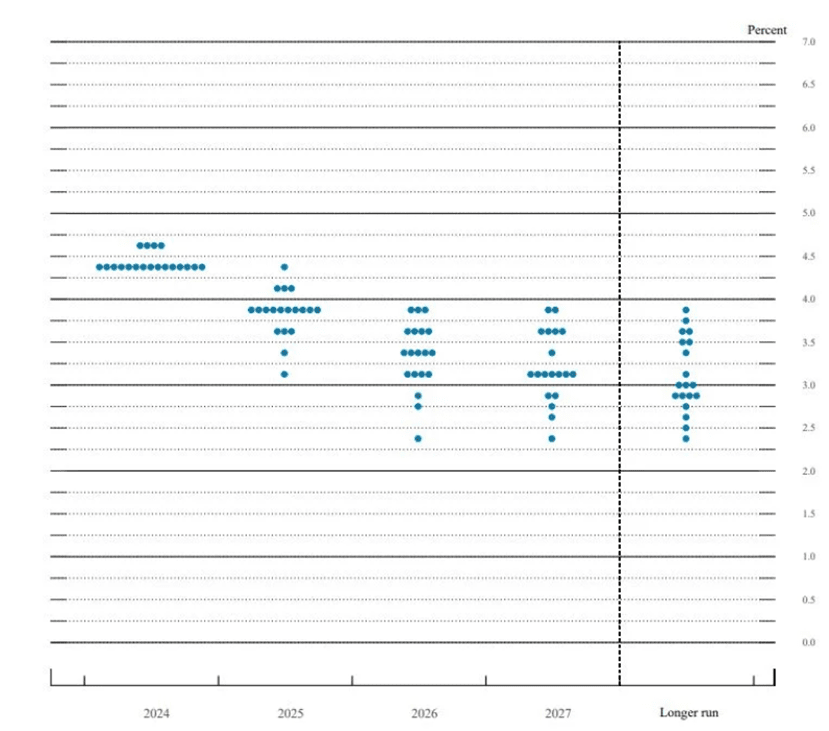
In December 2024, the Federal Reserve reduced its benchmark interest rate by 0.25 percentage points, marking the third cut of the year. However, the Fed's latest projections indicate a more cautious approach for 2025, anticipating only two additional quarter-point rate cuts, a decrease from the four cuts projected in September.11 This adjustment reflects concerns over persistent inflation, which remains above the Fed's 2% target.
FOMC participants’ assessment of appropriate monetary policy: Midpoint of target range level for federal funds rate
Investor Sentiment and Volatility Risks
Investor sentiment remains mixed as conflicting economic signals and geopolitical risks weigh on the US equity market outlook. Volatility has increased in recent months, with key market events such as Federal Reserve meetings and fiscal policy decisions causing sharp fluctuations.5
Short-term risks include:
- Earnings Divergence: Sectors such as technology continue to outperform, while cyclicals struggle.
- Geopolitical Risks: Trade tensions and global conflicts add to uncertainty.
- Consumer Spending Trends: Rising interest rates are beginning to weigh on household spending.2
Conclusion
US equity markets remain at a crossroads, with a mix of optimism and caution prevailing. While corporate fundamentals support further growth, speculative flows, fiscal headwinds, and monetary tightening present significant risks.
Investors should remain vigilant and consider a balanced approach, factoring in both opportunities and potential downturn risks.
A well-balanced portfolio that includes alternative investments can help mitigate risks while positioning for long-term growth. Now is the time to guide your clients toward strategies that can confidently address the opportunities and uncertainties ahead.
Sources:
- It Was a Very Good Year | Charles SchwabIt Was a Very Good Year | Charles Schwab
- Gross Domestic Product (Third Estimate), Corporate Profits (Revised Estimate), and GDP by Industry, Third Quarter 2024 | U.S. Bureau of Economic Analysis (BEA)
- Economic Bubble: Economic Bubble Economics: Understanding the Cycle of Boom and Bust - FasterCapital
- U.S. money market funds - a safe haven?
- CAPE Ratios by Country 2024 (Shiller PE) | Siblis Research
- Fed lowers rates but sees fewer cuts next year due to stubbornly high inflation | Reuters
- US national debt hits record $34 trillion
- Meet the Magnificent 7, the stocks powering a Wall Street rally : NPR
- Stocks are expensive, and nobody cares
- US debt to reach 107pc of GDP by 2029: Congressional Budget Office director Phillip Swagel details a 10-year outlook
- US Fed rate cut Highlights: FOMC cuts by a 25 basis point, indicates fewer reductions ahead
View private market and hedge fund exposures available on our platform.
For financial advisors only.