


Published on October 29, 2024
Will Oil Prices Continue to Be Affected by the Middle East Conflict?
The Middle East conflict has again placed the region at the center of geopolitical turmoil. Despite the ongoing warfare, oil prices have largely ignored the tensions that began last year, apparently offset by softening demand from China and robust supply. However, Iran’s recent missile attack on Israel and Israel's retaliation have reignited concerns about the impact on oil prices and beyond.
The Implications of the Middle East Conflict
The humanitarian loss following the October 7, 2023, Hamas-led attack on Israel has been devastating. Immediately following the attacks, markets fell, and oil prices spiked. However, the gains were temporary1, and while concerns persisted about the impact of a widening conflict on energy supplies, oil prices have generally traded lower than before the start of the conflict.
The price of WTI Crude Oil Futures closed at $82.79 on October 6, 2023—the day before the attack—and at $72.08 on October 14, 2024.
WTI Crude Oil Futures
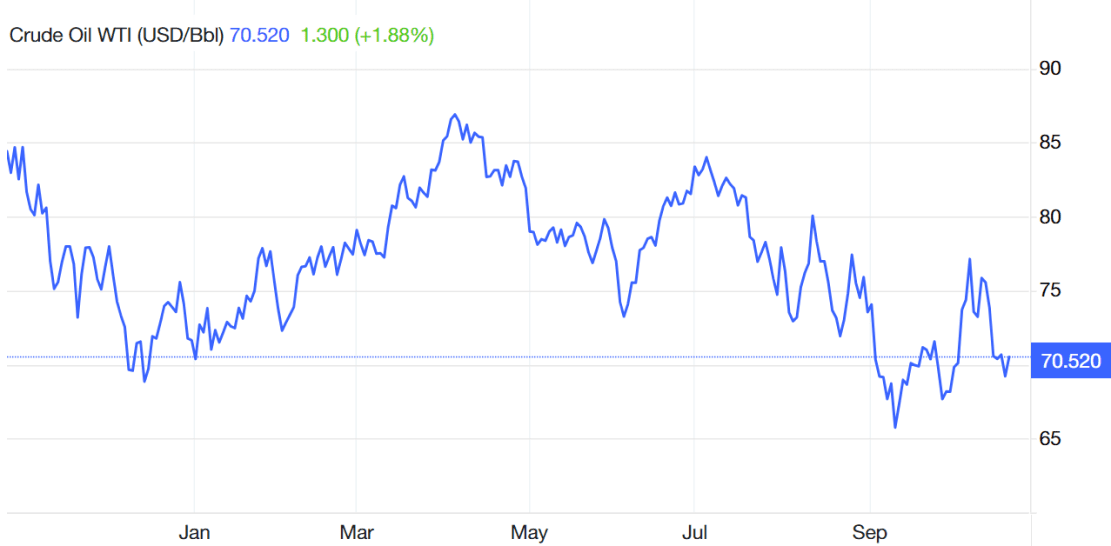
Following a resurgence of military action in mid-September, including Iran launching missiles at Israel, oil prices rose. While there was an initial surge in prices, oil has not steadily held onto any price gains.
Equity markets also seem unfazed by the Middle East conflict. Using the SSGA SPY ETF as a representative of the broader market, markets gained 27% over the 12 months ending October 11, 2024. While the broader market has maintained its focus on economic data, one sector has done well over the past 12 months—defense stocks. As both the Russia/Ukraine war and the Middle East conflict continue, defense spending is on the rise across the globe, helping the performance of the companies that develop, manufacture, and maintain military equipment and technology. In 2023, the United States dedicated $916 billion to the military, and outlays for defense are expected to rise to $1.1 trillion by 2033, according to the Congressional Budget Office.2
As measured by the SSGA ETFs, defense stocks (XAR) rose approximately 32%, outperforming both energy stocks (XLE), up 8%, and the broader market (SPY), which gained 27%.
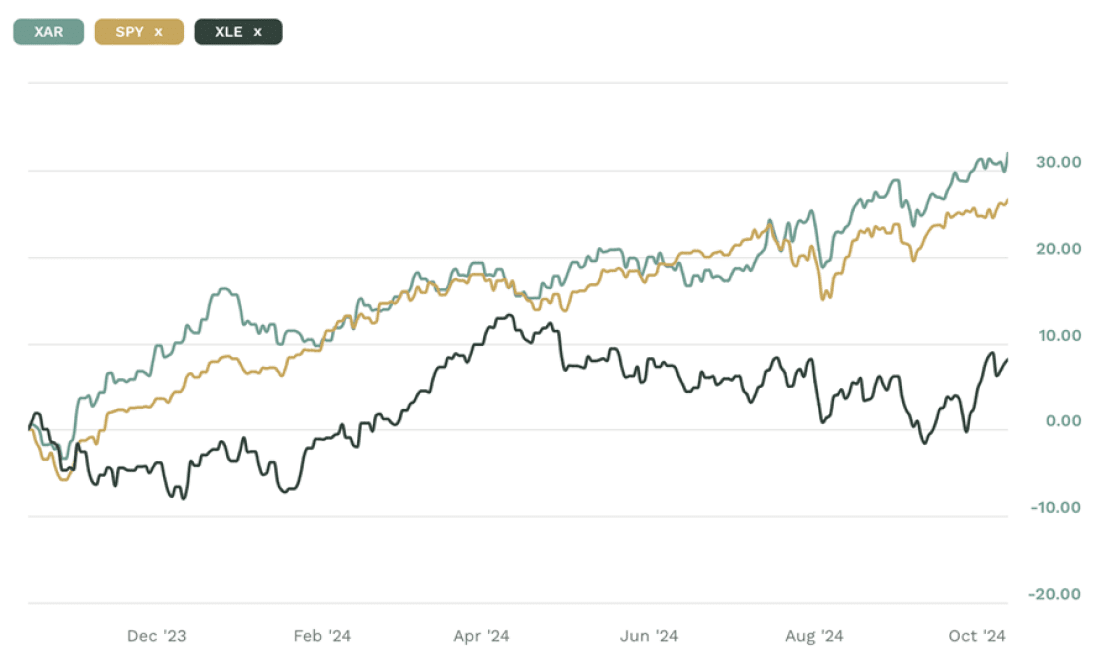
Source: https://www.etf.com/XAR
How Have Prior Geopolitical Conflicts Impacted Markets
In the 1970s, Middle East conflicts had a major impact on the markets. The Arab-Israeli War in October 1973 resulted in an oil embargo against the United States, causing oil prices to quadruple and shortages in fuel supplies. Then again, in 1978, the revolution in Iran led to a decline in Iranian oil production and drove up oil prices.3
However, more recent events have had less of an impact on the S&P 500.
| S&P 500 Return | Days | ||||
|---|---|---|---|---|---|
| Market Events | Event Date | One Day | Total Drawdown | Bottom | Recovery |
| Iranian General Killed in Airstrike | 1/3/2020 | -0.70% | -0.70% | 1 | 5 |
| U.S. Pulls Out of Afghanistan | 8/30/2021 | 0.40% | -0.10% | 1 | 3 |
| Escalation of Russia/Ukraine Conflict | 2/14/2022 | -2.10% | -6.80% | 13 | 23 |
| Israel-Hamas War | 10/9/2023 | 0.30% | -4.50% | 14 | 19 |
| Iran Drone/Missile Attacks on Israel | 4/14/2023 | -1.20% | ? | ? | ? |
The Middle East Conflict and Shifting Supply and Demand Dynamics
The United States has been the world’s top oil producer since 2018, helped by hydraulic fracturing and horizontal-drilling techniques. With a 22% share of the global markets, the U.S. has more than double the output of Saudi Arabia and Russia, with 11% each.4
In addition to more oil being produced outside of the Middle East, the Organization of Petroleum Exporting Countries (OPEC) has repeatedly cut its demand growth estimates,5 largely in part due to weakening growth in China, the world’s second-largest oil consumer. Saudi Arabia’s oil minister even warned other oil-producing countries that oil could crash to $50 per barrel if production limitations weren’t maintained.6
While oil prices have stagnated, there have been fears about the outcome of any disruption to shipping through the Strait of Hormuz.7 The narrow waterway, which connects the Persian Gulf to the Gulf of Oman and the Arabian Sea, is located between Iran and Oman and is considered by the U.S. Energy Information Administration to be the world’s most important oil choke point. Several of the world’s largest producers ship through the Strait of Hormuz, including Saudi Arabia, the United Arab Emirates (UAE), Kuwait, and Iraq, equaling about one-fifth of the world’s oil.
Iran has threatened several times to cut off access to the waterway but has never followed through. And while the possibility of a closure remains, it appears to be highly unlikely—as it would significantly impact Iran. Oil is the country’s primary source of revenue, and closure would also stop its own tankers from leaving the gulf. Secondly, while Iran is on one side of the Strait, the UAE is on the other. Ships can and do avoid Iran’s territorial waters and stay on the side of the UAE.
Is This Middle East Conflict Different?
While the Middle East conflict may temporarily raise oil prices, recent history suggests the long-term outlook won’t see drastically higher prices. The situation, however, remains fluid, and any escalation could quickly change that forecast. Uncertainties remain, and geopolitical risks and potential supply chain disruptions could lead to periodic spikes. Any unexpected policy shifts from major oil-producing nations could further impact prices.
There are additional risks. While the Strait of Hormuz doesn’t appear to be a threat, the Houthi attacks on the Red Sea have escalated and could pose a risk to global energy supplies. The continued geopolitical and macroeconomic uncertainty suggests that volatility remains, and any prolonged spike in oil price could have cascading effects on the economy and prompt a resurgence of inflation.
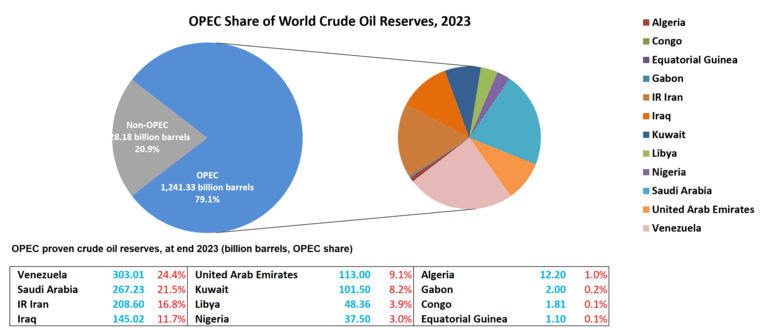
There is also the issue of oil reserves. While the U.S. may be the world’s largest oil producer today, that may not always be true. OPEC countries command nearly 80% of the world’s proven oil reserves, with Venezuela, Saudi Arabia, and Iran controlling almost 63% of the total. By comparison, the United States has only 2.1%.8
Conclusion
With so many variables at play, it is challenging to predict market responses. The ongoing crisis in Ukraine and the Middle East presents unpredictable scenarios that require an active management approach. Global macro funds can help capitalize on geopolitical and macroeconomic events through strategic trading.
Sources:
- Dow Futures Open 180 Points Lower After Hamas Attack Against Israel
- Countries with the Highest Military Spending
- Oil and the Energy Crisis of the 1970
- What countries are the top producers and consumers of oil?
- OPEC: Monthly Oil Market Report
- Saudi Minister Warns of 50 oil as OPEC Members Flout Production Cuts
- Oil Markets on High Alert as Middle East Conflict Deepens
- Oil Reserves by Country
See the global macro hedge funds listed on our platform to include in clients’ portfolios
For financial advisors only.